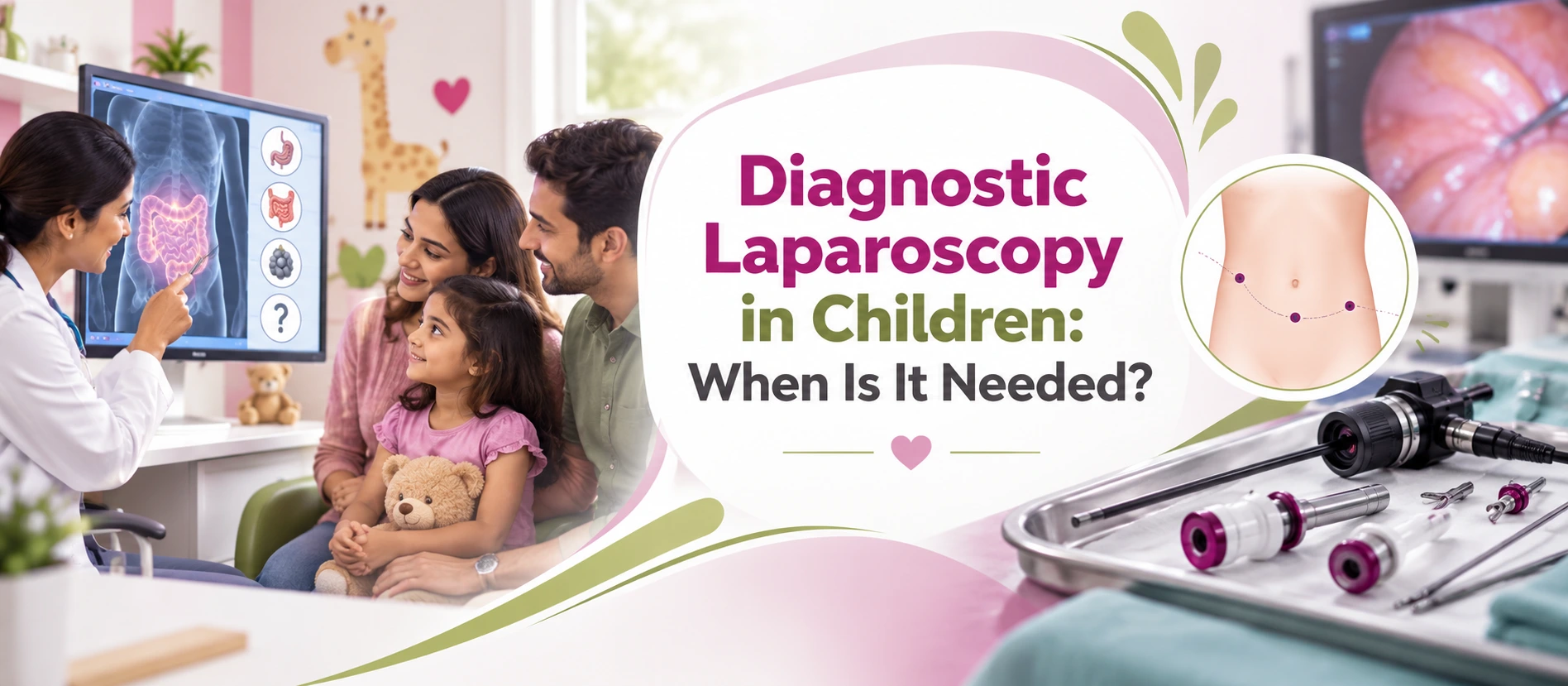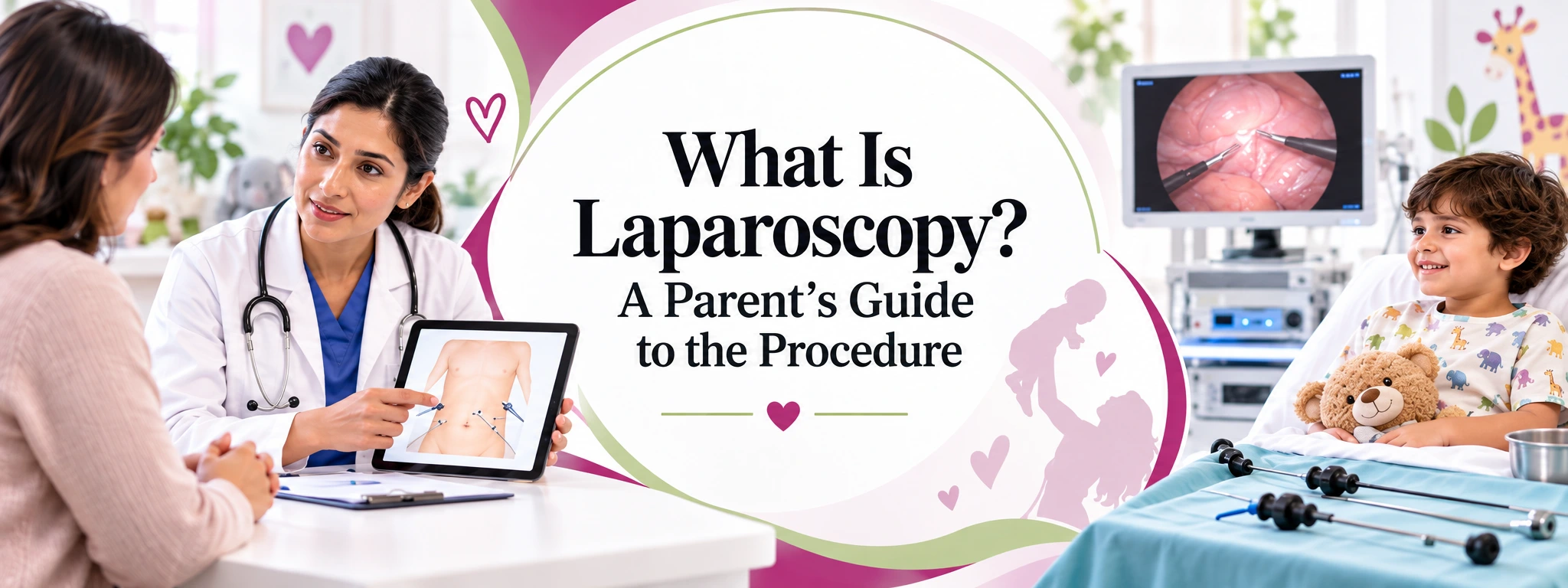

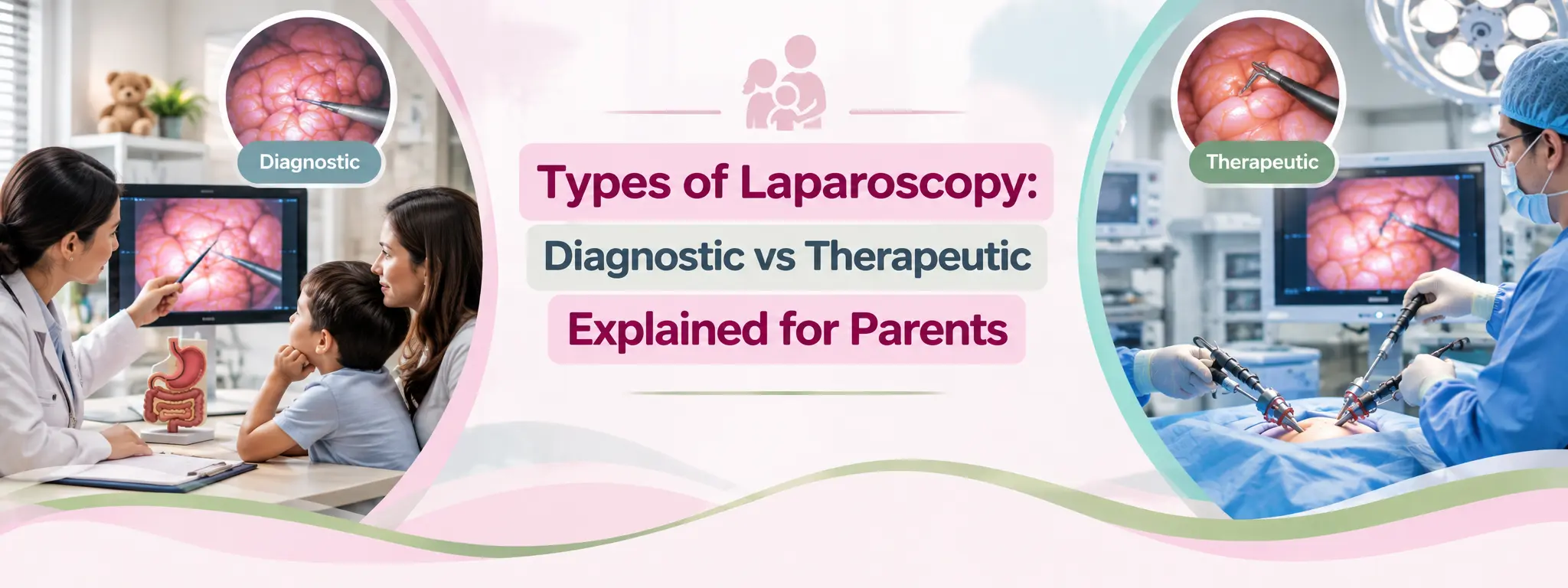
When a doctor says your child may need laparoscopy, you may hear terms such as diagnostic, therapeutic, or operative laparoscopy. These words can sound confusing, especially when you are already worried about your child’s health.
When classified by purpose, the two broad types of laparoscopy are diagnostic laparoscopy and therapeutic, or operative, laparoscopy. One is mainly used to investigate a problem, while the other is used to treat it. In some cases, both may happen during the same procedure.
Understanding this difference can help you ask clearer questions and know what your child’s pediatric surgeon plans to do.
What Are the Main Types of Laparoscopy?
Laparoscopy is a minimally invasive surgical method used to look inside the abdomen or pelvis. A thin camera called a laparoscope is placed through a small incision. The camera sends images to a screen so the surgeon can see internal organs clearly.
When laparoscopy is grouped by its purpose, there are two main types:
- Diagnostic laparoscopy: Used mainly to investigate or confirm a medical problem.
- Therapeutic laparoscopy: Used to treat a condition through minimally invasive surgery.
Therapeutic laparoscopy is also called operative laparoscopy.
Laparoscopy can also be described by the operation being performed, such as laparoscopic appendix surgery. For parents, however, the diagnostic-versus-therapeutic difference is often the easiest way to understand why the procedure is being recommended.
What Is Diagnostic Laparoscopy in Children?
Diagnostic laparoscopy allows a pediatric surgeon to directly examine organs and tissues inside a child’s abdomen or pelvis.
It may be considered when symptoms continue, but tests such as ultrasound, CT, or MRI do not give enough information to clearly identify the problem. During the procedure, the surgeon may also take a small tissue sample, called a biopsy, if further testing is needed.
Why Might Diagnostic Laparoscopy Be Recommended?
A surgeon may consider diagnostic laparoscopy when:
- Abdominal symptoms continue without a clear cause
- Scan results are unclear or do not fully explain the symptoms
- An internal organ needs to be examined directly
- A tissue sample is needed
- A suspected surgical problem needs confirmation
Diagnostic laparoscopy does not simply replace scans. Imaging gives doctors useful pictures without surgery, while laparoscopy allows direct viewing inside the body. The choice depends on what information the medical team still needs.
Even when no treatment is planned, diagnostic laparoscopy is still a surgical procedure because it involves anesthesia and small incisions.
What Is Therapeutic Laparoscopy in Children?
Therapeutic laparoscopy is performed when the main goal is to treat a condition.
The laparoscope allows the surgeon to see inside the abdomen, while small surgical instruments are passed through other small openings when needed. Depending on the problem, the surgeon may repair, remove, reposition, or treat affected tissue.
Therapeutic laparoscopy may be used in selected pediatric procedures such as:
- Laparoscopic appendix removal
- Treatment of an undescended testis in suitable cases
- Selected abdominal or intestinal procedures
- Certain hernia-related procedures
- Selected pelvic operations
Not every condition can or should be treated laparoscopically. The child’s age, anatomy, previous surgery, overall health, and the complexity of the condition can affect which approach is safest.
It is also important to understand that minimally invasive surgery does not always mean minor surgery. A complex operation may still be performed through small cuts.
Diagnostic vs Therapeutic Laparoscopy: What Is the Difference?
The main difference is the purpose of the procedure. Diagnostic laparoscopy is mainly used to investigate or confirm a condition. Therapeutic laparoscopy is performed when surgical treatment is needed.
| Factor | Diagnostic Laparoscopy | Therapeutic Laparoscopy |
| Main purpose | Investigate or confirm a problem | Treat a condition |
| Camera used | Yes | Yes |
| Surgical instruments | May be used if needed | Usually used |
| Small incisions | Yes | Yes |
| Anesthesia in children | Typically general anesthesia | Typically general anesthesia |
| Treatment | Sometimes | Yes |
| Recovery | Depends on what was done | Depends on the operation |
Recovery should not be judged only by the size of the cuts. Two children may both have “laparoscopy” but recover differently because the amount of surgery performed may be very different.
Can Diagnostic Laparoscopy Become Therapeutic Laparoscopy?
Yes, in some situations. A procedure may begin as diagnostic laparoscopy, and the surgeon may find a problem that can be treated during the same operation.
If this possibility has been discussed and included in the surgical consent, the surgeon may sometimes move from investigation to treatment without needing a second anesthetic.
A simple way to understand the process is:
- More information is needed → diagnostic laparoscopy may be considered.
- A known condition needs treatment → therapeutic laparoscopy may be planned.
- A treatable problem is found during diagnosis → both may happen in the same procedure.
Treatment is not automatic. The surgeon must decide whether it is safe and suitable based on what is found.
How Does a Pediatric Surgeon Decide Which Type Is Needed?
Choosing the right approach usually requires more than one test or scan.
A pediatric surgeon may consider:
- The child’s symptoms
- Physical examination findings
- Ultrasound, CT, MRI, or other test results
- Whether the diagnosis is already known
- Whether surgery is expected to be necessary
- The child’s age and overall health
- Previous abdominal operations
- The location and complexity of the condition
In some cases, the surgeon may begin with a laparoscopic approach but use open surgery if that becomes safer or gives better access.
For parents, one of the most useful questions to ask is: “What does the surgeon expect to find or treat during my child’s procedure?”
That question often gives more useful information than simply asking which type of laparoscopy is planned.
What Should Parents Expect Before and After Laparoscopy?
Children having laparoscopy are typically given general anesthesia, which means they remain asleep during the procedure.
Before surgery, parents may receive instructions about fasting, medicines, tests, and arrival time. It is also helpful to ask whether the procedure is expected to be diagnostic, therapeutic, or whether treatment may be performed if something unexpected is found.
After surgery, the child is monitored while waking from anesthesia. Some temporary discomfort around the incision sites can occur. The medical team will advise parents about pain relief, food, activity, wound care, bathing, school, and follow-up.
Recovery depends mainly on what was done during surgery, not just on the fact that laparoscopy was used.
How Long Does Recovery Take After Pediatric Laparoscopy?
Recovery time depends on what was actually done during surgery, not just on the fact that laparoscopy was used. For straightforward diagnostic procedures, many children go home the same day or the next morning, with only mild soreness around the incision sites. Therapeutic procedures, such as appendix removal or hernia repair, may involve a slightly longer hospital stay and a few days of restricted activity at home before returning to normal routines and school. Your child’s surgeon will give a more specific recovery timeline based on the exact procedure performed.
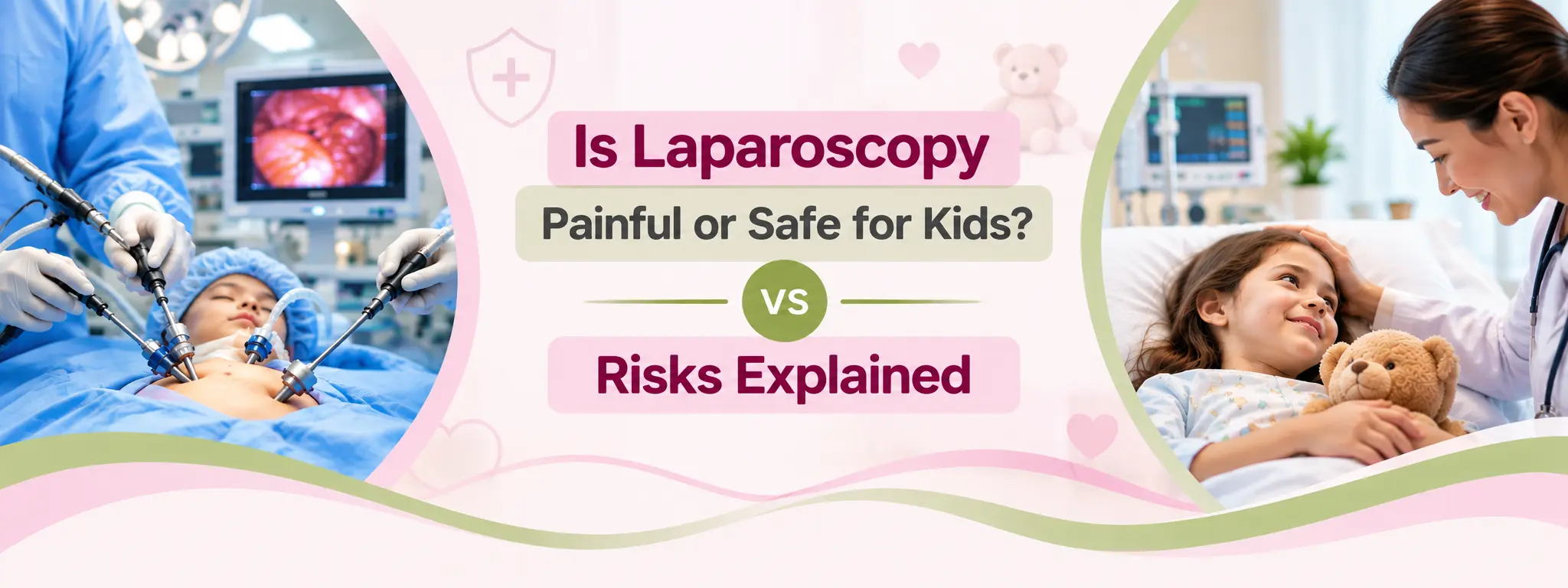
Are There Risks With Pediatric Laparoscopy?
As with any surgery, laparoscopy carries some risks, including infection, bleeding, or reaction to anesthesia. Serious complications are uncommon, and laparoscopic approaches are generally associated with less pain and faster recovery than open surgery. Your child’s surgeon will discuss the specific risks relevant to the planned procedure before surgery.
FAQ’s
Is diagnostic laparoscopy considered surgery?
Yes. It involves anesthesia and small incisions, even when the main goal is only to examine or diagnose a problem.
Does therapeutic laparoscopy mean my child’s condition is serious?
Not necessarily. “Therapeutic” simply means that treatment is being performed. The seriousness depends on the child’s actual condition.
Can laparoscopic surgery be changed to open surgery?
Yes. If the surgeon believes open surgery would be safer or more effective, the approach may be changed during the operation.
How many cuts are needed for laparoscopy?
The number and location of incisions depend on the procedure. A simple diagnostic procedure may need fewer openings than a more complex operation.
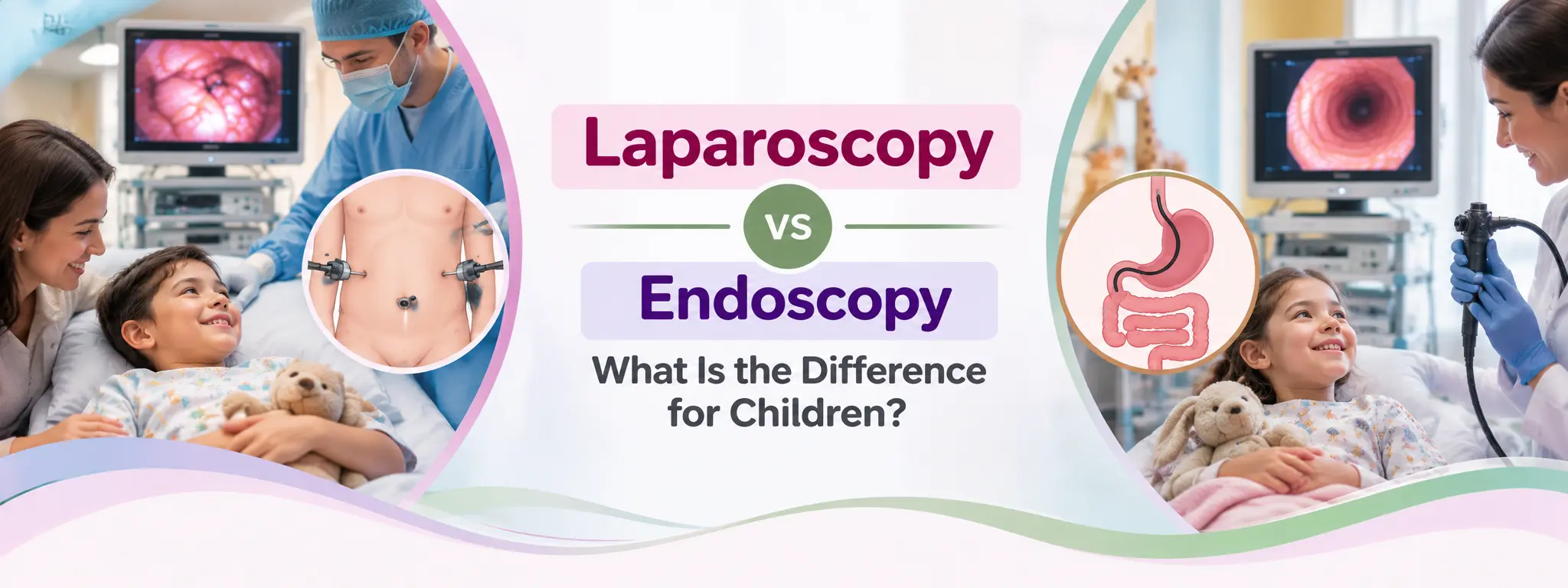
Is laparoscopy the same as endoscopy?
No. Laparoscopy usually enters the abdomen through small incisions, while many endoscopic procedures use natural openings such as the mouth.
If your child has been advised to undergo laparoscopy, a consultation with a pediatric surgeon can help you understand the exact procedure planned, what to expect, and how it applies to your child’s specific condition. Book a consultation with Dr. H.P.S. Miglani to discuss your child’s care.