

Neonatal & Pediatric Ventilator Support
24/7 Respiratory Critical Care
Neonatal & Pediatric Ventilator Support
Round-the-clock mechanical ventilation and respiratory support for newborns and children with breathing difficulty, backed by Dr. H.P.S. Miglani’s 30+ years of pediatric surgical and critical care experience.
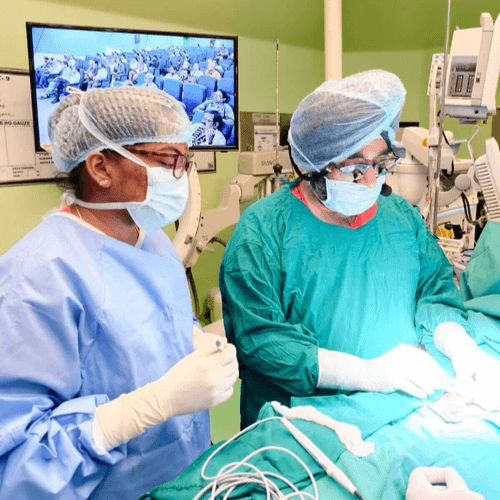
Why this matters for your child
Breathing support built for a baby's or child's lungs
A newborn’s lungs, especially if born prematurely, are far more delicate than a child’s or adult’s — ventilator settings that are safe for one age group can be harmful for another. This care requires equipment and monitoring specifically calibrated for neonates and children.
Miglani Hospital provides this level of respiratory support locally in Amritsar, meaning families do not need to transfer to other big cities or metro cities during a critical, time-sensitive period.
Ventilator settings calibrated for newborns & children

Close coordination between surgical & critical care teams

Local access to critical respiratory care in Amritsar

24/7 monitoring by an experienced care team
In plain language
What is neonatal & pediatric ventilator support?
A ventilator is a machine that helps a baby or child breathe when they are unable to breathe adequately on their own — whether due to prematurity, an infection, a condition affecting the lungs, or as support after surgery.
Support can range from gentle, non-invasive breathing assistance to full mechanical ventilation through a breathing tube, depending on how much help your child’s lungs need. The level of support is adjusted continuously as your child’s condition changes.
Quick answer: Ventilator support helps a newborn or child breathe when they cannot do so adequately on their own, using equipment and settings specifically calibrated for their age and lung development.
When it's needed
Situations where ventilator support may be needed
Respiratory support may be needed temporarily or for a longer period, depending on the underlying cause.

Respiratory Distress Syndrome
Breathing support for premature babies whose lungs are not yet fully developed.

Post-Operative Support
Temporary ventilator support for babies and children recovering from major surgery.

Respiratory Infection / Sepsis
Support for children whose breathing is affected by a serious infection.
Congenital Lung & Airway Conditions
Ongoing respiratory support for babies with structural lung or airway differences.

Meconium Aspiration Syndrome
Breathing support for newborns who inhaled meconium around the time of birth.
What parents should know
Signs a baby or child may need respiratory support
These are usually recognised and managed by the medical team, but it helps for parents to understand what’s being watched for.
In newborns
- Rapid, laboured, or grunting breathing
- Bluish tint to lips, face, or body
- Flaring nostrils or pulling in of the chest with each breath
In older infants & children
- Persistent rapid breathing or visible effort to breathe
- Unusual drowsiness or difficulty staying alert
- Breathing difficulty following surgery or serious illness
🚨 If your baby or child shows signs of severe breathing difficulty — bluish lips, grunting, or laboured breathing — this is a medical emergency. Call 0183-5052091 or go to the nearest emergency room immediately.
Our approach
Careful, continuously adjusted respiratory support
Ventilator support is not a fixed setting — it’s adjusted continuously based on how your child responds.
- Respiratory support level (non-invasive to full ventilation) matched to your child’s specific need
- Continuous monitoring of oxygen levels, breathing effort, and overall response
- Regular reassessment to reduce support as soon as it’s safely possible
- Close coordination between the surgical, neonatal, and critical care teams
Who will operate on your child
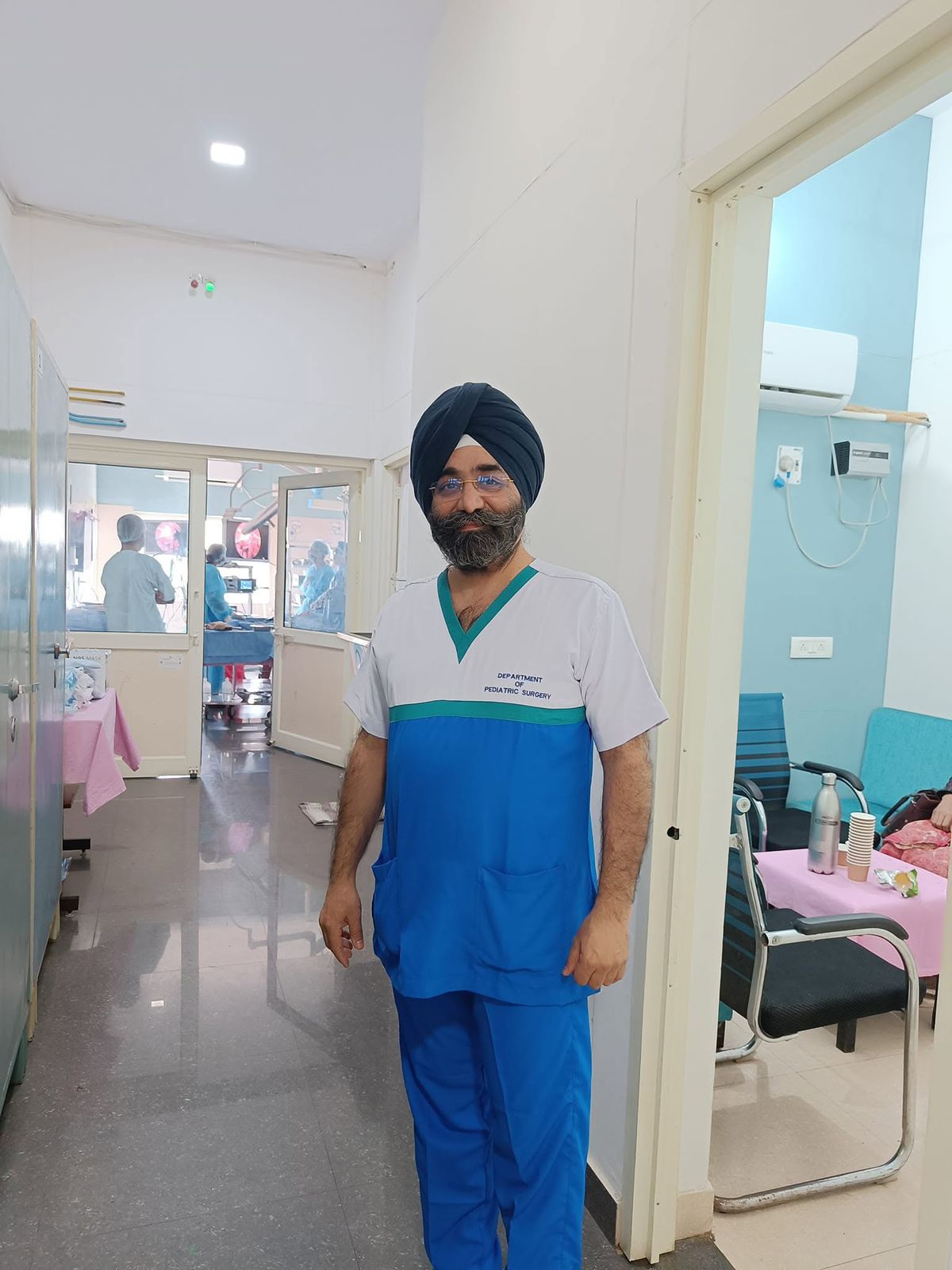
Meet Dr. Harparkash Singh Miglani
Dr. Harparkash Singh Miglani is a pediatric surgeon with over 30 years of experience, specializing in pediatric minimal access (Laparoscopic) Surgery, Hypospadias Surgery, Pediatric Urology, and Neonatal Surgery. He holds an M.Ch in Pediatric Surgery from PGIMER, Chandigarh, and has trained at leading surgical centers across India.
He has been recognized with the IAPS-Karl Storz Visiting Professor Fellowship and the Ethicon Travel Fellowship. He has participated as Faculty, Delegate, Operating Faculty, and Orator in more than 100 national and international conferences and live operative workshops. He has published his original peer-reviewed surgical technique in the field of hypospadias — the HPS Landmarks Technique, a foreskin-preserving method for hypospadias repair — in the Journal of the Indian Association of Pediatric Surgeons, along with several other publications and contributions as book chapters in textbooks of pediatric surgery.
Regional Distinction
Only pediatric surgeon in Amritsar currently offering minimally invasive laparoscopic surgery for children
Qualification
M.Ch in Pediatric Surgery, PGIMER, Chandigarh (1995); DNB (Pediatric Surgery), National Board of Examinations (1996)
Experience
30+ years in pediatric surgery
Fellowships
IAPS Karl Storz Visiting Professor Fellowship, Ethicon Travel Fellowship
Published Research
Many publications in prestigious national and international peer-reviewed journals; contributed book chapters in textbooks of Pediatric Surgery and Pediatric Endo Surgery
What to expect
What to expect during ventilator care
Before Surgery
Evaluation
The medical team assesses your baby's or child's breathing and oxygen levels.
Support decision
The appropriate level of respiratory support is determined and started promptly.
Family communication
The team explains the plan and what to expect during this period.
During Surgery
Continuous monitoring
Breathing, oxygen levels, and overall condition are monitored around the clock.
Regular adjustment
Ventilator settings are adjusted as your child's condition changes.
Supportive care
Nutrition, comfort, and infection prevention are managed alongside respiratory support.
After Surgery
Weaning
Support is gradually reduced as your child's own breathing strengthens.
Close observation
Careful monitoring during and after the transition off the ventilator.
Recovery & follow-up
Continued monitoring until your child is breathing comfortably on their own.
What happens next
The path off ventilator support
Ongoing care
Support level is reassessed regularly and adjusted as your child improves.
Weaning period
Support is gradually reduced, monitored closely at each step.
Coming off the ventilator
Once your child can maintain their own breathing, support is stopped,
with continued observation.
Follow-up
Ongoing monitoring to confirm stable, comfortable breathing before discharge.
Understand more about Laparoscopic Surgery
Cost transparency
What does ventilator support cost?
Cost depends on the specific procedure, complexity, room category and length of stay. Speak to our team for a personalised estimate before treatment.
Personalised Estimates
- Duration of ventilator support required
- Underlying condition being treated
- Level of care needed (ICU vs. step-down care)
- Any additional treatments required alongside respiratory support
Common questions
Frequently asked questions
Is ventilator support safe for a newborn?
Yes, when provided by a team experienced in neonatal respiratory care, using settings specifically calibrated for a newborn’s developing lungs.
How long will my baby need to be on a ventilator?
This varies widely depending on the underlying cause — from a few hours after surgery to a longer period for premature babies. The team will keep you updated on progress.
Can I be with my baby while they're on a ventilator?
Yes, parental presence is an important part of care. The team will guide you on how to be involved safely.
Will my child's breathing return to normal after coming off the ventilator?
Most children breathe normally once weaned, though this depends on the underlying condition. The care team monitors closely to confirm your child is stable before discharge.
In parents' words
What families in Amritsar say
"No doubt, excellent pediatric surgeon, well experienced — got my daughter's appendicitis surgery done here."
Jagjit Singh Bains
Amritsar
"A very well experienced and efficient pediatric surgeon in Amritsar. Well-maintained child center with good hygiene."
Munna Kumar
Amritsar
"The doctor and staff are efficient with a lot of positivity around. I'm happy with services and would recommend this hospital for child surgery."
Sumanpreet Bajwa
Amritsar
Need urgent respiratory care for your baby or child?
Book a consultation with Dr. H.P.S. Miglani for an honest, experienced assessment and a clear surgical plan for your child.