

Laparoscopic Surgery
Amritsar's Only Pediatric Laparoscopic Surgeon
Minimally Invasive (Laparoscopic) Surgery for Children in Amritsar
Dr. H.P.S. Miglani is currently the only pediatric surgeon in Amritsar offering minimally invasive (keyhole) surgery for children — for appendix, hernia, gallbladder and chest & abdomen conditions — backed by 30+ years of dedicated child-surgery experience.
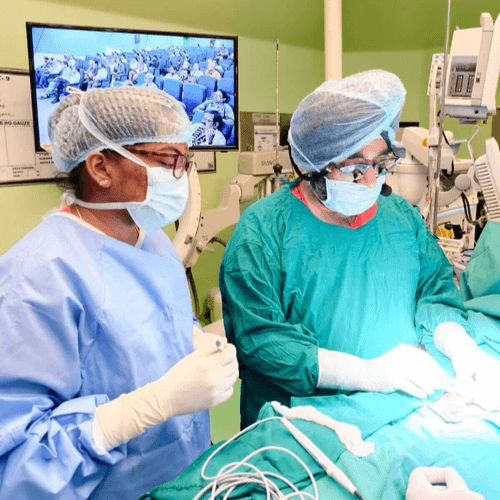
Why this matters for your child
The only pediatric surgeon in Amritsar offering minimally invasive surgery for children
Laparoscopic surgery on a child is not the same as laparoscopic surgery on an adult. It requires instruments scaled to a child’s smaller anatomy, anaesthesia protocols suited to a developing body, and training specific to pediatric minimal access surgery — not general or adult laparoscopic experience.
Dr. H.P.S. Miglani holds an IAPS-Karl Storz Visiting Professor Fellowship, specifically focused on advanced minimal access surgical technique, and is currently the only pediatric surgeon in Amritsar offering this approach for children — meaning families do not need to travel to other big cities or metro cities for keyhole surgery on their child.
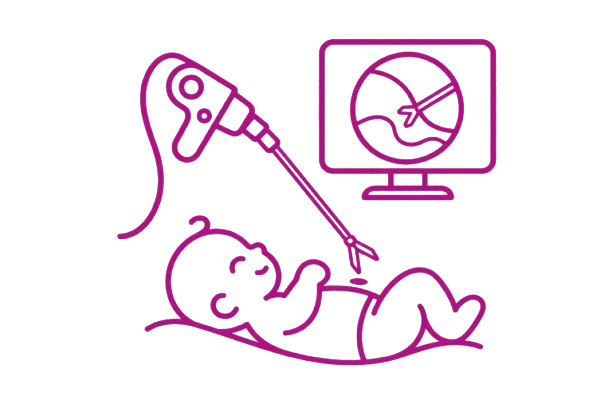
Child-specific laparoscopic instruments & technique

Well trained and recipient of the IAPS Karl Storz fellowship

Child-specific No need to travel outside Amritsar for keyhole surgeryinstruments & technique

Child-specific laparoscopic instruments & technique
In plain language
What is pediatric laparoscopic surgery?
Pediatric laparoscopic surgery, often called “keyhole surgery,” is a minimally invasive procedure performed through 3–4 small incisions instead of one large cut. A thin instrument with a camera, called a laparoscope, is inserted through one of these incisions and gives the surgeon a magnified, high-definition view of the inside of your child’s tummy or chest on a screen, while small, child-sized instruments carry out the operation.
Because the incisions are only a few millimetres wide, children who have laparoscopic surgery generally experience less pain, smaller scars, and a quicker return to school and play than with traditional open surgery.
Quick answer: Laparoscopic surgery in children treats conditions inside the abdomen or chest — like the appendix, a hernia, or the gallbladder — through small keyhole incisions, under general anaesthesia, usually with a same-day or overnight hospital stay.
Conditions we treat
What can pediatric laparoscopic surgery treat?
Dr. H.P.S. Miglani uses minimally invasive (keyhole) surgical techniques to treat a wide range of pediatric conditions, from common day-care procedures to complex neonatal cases.

Appendix (Appendicitis)
Laparoscopic appendectomy for acute appendicitis — one of the most common pediatric surgical emergencies, often presenting with right lower abdominal pain and fever.

Hernia Repair
Laparoscopic repair of inguinal and umbilical hernias, including bilateral hernias, often completed in a single procedure with minimal scarring.

Gallbladder (Gallstones)
Laparoscopic cholecystectomy for gallstones and other gallbladder conditions in children, helping relieve pain and prevent recurrent complications.

Kidney Conditions
Minimal access procedures for select pediatric kidney and urinary tract conditions, performed alongside our pediatric urology services.

Chest Conditions
Thoracoscopic (chest) procedures for selected congenital and acquired chest conditions in infants and children.
Undescended Testes
Intra-abdominal testes are treated laparoscopically; palpable testes are treated with a scrotal orchidopexy — without any abdominal or inguinal incisions.

Other Abdominal Conditions
Ovarian cysts and selected congenital abdominal anomalies are evaluated and treated laparoscopically where appropriate.
Know the Signs
Signs your child may need this surgery
These symptoms don’t always mean surgery is needed — but they are reasons to have your child examined by a pediatric surgeon promptly.
Possible appendicitis
- Pain starting near the navel, moving to the lower right abdomen
- Fever with loss of appetite
- Nausea, vomiting, or abdominal pain that worsens with movement
Possible hernia
- A visible bulge in the groin or around the belly button
- The bulge becomes more noticeable when the child cries, coughs, or strains
- Discomfort or irritability associated with the bulge
Possible gallbladder disease
- Recurring upper abdominal pain, especially after meals
- Nausea or vomiting
- Yellowing of the skin or eyes (jaundice)
General warning signs
- Persistent or worsening abdominal pain lasting several hours
- High fever with a rigid or tender abdomen
- Refusal to eat, drink, or walk normally due to pain
🚨If your child has sudden, severe abdominal pain with fever or vomiting, do not wait for an appointment — this can be a surgical emergency. Miglani Hospital offers 24/7 emergency pediatric surgical care at 0183-5052091.
Why choose keyhole surgery
Laparoscopic vs. Open surgery for children
Most cases in the pediatric age group — even infants — can avail the benefits of minimally invasive surgery techniques, including laparoscopy.
| Factor | Laparoscopic (Keyhole) Surgery | Traditional Open Surgery |
|---|---|---|
| Incision size | 3-4 small cuts (3-5 mm each) | One larger incision |
| Post-operative pain | Usually less pain | Comparatively higher |
| Hospital stay | Often same day / overnight | Usually longer |
| Scarring | Minimal, less visible | More visible |
| Return to school/play | Typically faster | Typically slower |
| Suitability | Suitable for most pediatric conditions, including in infants | Selected complex cases, decided individually by the surgeon |
Who will operate on your child
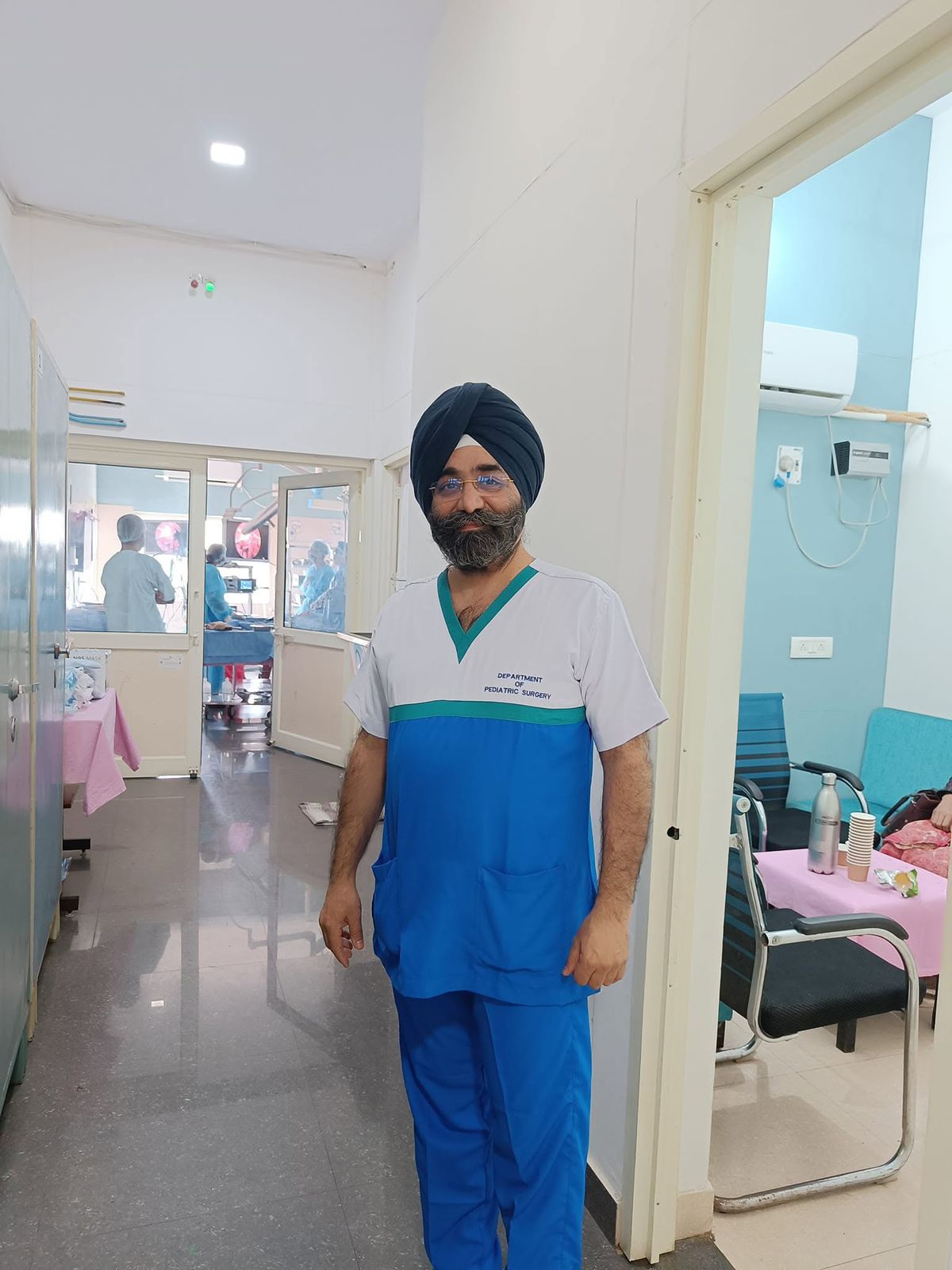
Meet Dr. Harparkash Singh Miglani
Dr. Harparkash Singh Miglani is a pediatric surgeon with over 30 years of experience, specializing in pediatric minimal access (Laparoscopic) Surgery, Hypospadias Surgery, Pediatric Urology, and Neonatal Surgery. He holds an M.Ch in Pediatric Surgery from PGIMER, Chandigarh, and has trained at leading surgical centers across India.
He has been recognized with the IAPS-Karl Storz Visiting Professor Fellowship and the Ethicon Travel Fellowship. He has participated as Faculty, Delegate, Operating Faculty, and Orator in more than 100 national and international conferences and live operative workshops. He has published his original peer-reviewed surgical technique in the field of hypospadias — the HPS Landmarks Technique, a foreskin-preserving method for hypospadias repair — in the Journal of the Indian Association of Pediatric Surgeons, along with several other publications and contributions as book chapters in textbooks of pediatric surgery.
Regional Distinction
Only pediatric surgeon in Amritsar currently offering minimally invasive laparoscopic surgery for children
Qualification
M.Ch in Pediatric Surgery, PGIMER, Chandigarh (1995); DNB (Pediatric Surgery), National Board of Examinations (1996)
Experience
30+ years in pediatric surgery
Fellowships
IAPS Karl Storz Visiting Professor Fellowship, Ethicon Travel Fellowship
Published Research
Many publications in prestigious national and international peer-reviewed journals; contributed book chapters in textbooks of Pediatric Surgery and Pediatric Endo Surgery
What to expect
The surgery journey, step by step
Before Surgery
Consultation & evaluation
Physical examination, symptom review and any required imaging or blood tests.
Fasting instructions
Clear guidance on when your child should stop eating and drinking.
Anaesthesia discussion
The anaesthesia team explains the plan and answers your questions.
During Surgery
General anaesthesia
Your child is kept comfortable and pain-free throughout.
Keyhole access
3–4 small incisions are made to insert the laparoscope and surgical instruments.
The procedure
The operation is performed under magnified camera view; surgery usually takes 1-2 hours.
After Surgery
Recovery room
Your child is monitored closely as they wake from anaesthesia.
Pain management
Medication and care instructions are provided by our team.
Discharge & follow-up
Most children are discharged at the earliest, when they are fully awake and comfortable — same day or the next morning. A follow-up visit is scheduled wherever required.
Healing at home
Recovery timeline after laparoscopic surgery
Day 0–1
Rest at hospital or home; mild grogginess from anaesthesia; pain managed with prescribed medication.
First week
Mild soreness at incision sites; gentle walking encouraged; light activities resume.
7–10 days
Most children can return to school; heavy lifting and vigorous play should still be avoided.
2–4 weeks
Gradual return to sports and strenuous activity, guided by the surgeon’s assessment at follow-up.
4–6 weeks
Full recovery for most procedures; incisions well healed with minimal visible scarring.
Understand more about Laparoscopic Surgery
| Myth | Fact |
|---|---|
|
✕
Myth
Anesthesia risk is higher |
✓
Fact
Often shorter duration, similar or lower risk |
|
✕
Myth
Recovery time is same as open surgery |
✓
Fact
Faster return to school/play, less pain, smaller scars |
|
✕
Myth
Bigger internal risks despite smaller scars |
✓
Fact
Comparable or lower complication rates with an experienced surgeon |
|
✕
Myth
Only simple surgeries possible via keyhole |
✓
Fact
Wide range — appendix, hernia, gallbladder, chest conditions — all treatable |
|
✕
Myth
Needs weeks of bed rest |
✓
Fact
Most kids up and moving within a day |
|
✕
Myth
Costs much more, not worth it |
✓
Fact
Shorter stay + faster recovery often lowers overall burden |
|
✕
Myth
Any surgeon can perform laparoscopic surgery on children |
✓
Fact
It requires specialized pediatric training and dedicated experience — a general or adult laparoscopic surgeon isn’t the same as a pediatric-trained one working with a child’s smaller anatomy and different physiology. |
Cost transparency
What does pediatric laparoscopic surgery cost?
Cost depends on the specific procedure, complexity, room category and length of stay. Speak to our team for a personalised estimate before surgery.
Personalised Estimates
- Type of laparoscopic procedure required
- Length of hospital stay (day-care or overnight)
- Room category chosen
- Any pre-existing conditions requiring additional care
Common questions
Frequently asked questions
What is pediatric laparoscopic surgery?
It is a minimally invasive surgical technique where a pediatric surgeon operates through 3-4 small incisions using a camera (laparoscope) and specially sized instruments, instead of one large open incision.
Is laparoscopic surgery safe for children?
Yes. Performed by a trained pediatric surgeon with child-sized instruments, it is a well-established, safe option for most children, including infants. Safety always depends on your child’s specific condition and health, assessed during a pre-operative evaluation.
What conditions are treated with this surgery?
Common conditions include acute appendicitis, inguinal and umbilical hernia, gallstones, undescended testes, ovarian cysts, and selected chest and abdominal conditions.
How long will my child stay in hospital?
Most children go home the same day or after one overnight stay. Straightforward hernia or appendix surgery is often a short-stay procedure.
How long is recovery after surgery?
Light activity resumes within days, school within about a week to ten days, and sports or strenuous play after 2-4 weeks, once your surgeon confirms healing is on track.
How is this different from open surgery?
Laparoscopic surgery uses smaller incisions, generally causes less pain, leaves minimal scarring, and allows faster recovery. Open surgery uses one larger incision and is still preferred for certain complex cases.
At what age can my child have this surgery?
Laparoscopic surgery can be performed from the newborn period through the teenage years, depending on the condition, weight and overall health of the child — assessed individually by the pediatric surgeon.
In parents' words
What families in Amritsar say
"No doubt, excellent pediatric surgeon, well experienced — got my daughter's appendicitis surgery done here."
Jagjit Singh Bains
Amritsar
"A very well experienced and efficient pediatric surgeon in Amritsar. Well-maintained child center with good hygiene."
Munna Kumar
Amritsar
"The doctor and staff are efficient with a lot of positivity around. I'm happy with services and would recommend this hospital for child surgery."
Sumanpreet Bajwa
Amritsar
Have questions about your child's surgery?
Book a consultation with Dr. H.P.S. Miglani — Amritsar’s only pediatric laparoscopic surgeon — and get clear, honest guidance on the best treatment path for your child, without needing to travel out of city.