

Hypospadias & Epispadias Surgery
Dr. Miglani's Area of Special Interest
Hypospadias & Epispadias Surgery in Amritsar
Precise, foreskin-preserving reconstructive surgery for hypospadias and epispadias, performed by Dr. H.P.S. Miglani — creator of the published HPS Landmarks Technique, with 30+ years of pediatric surgical experience.
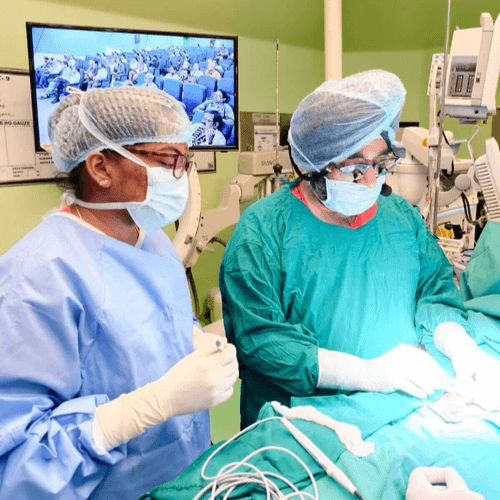
A recognised area of special expertise
Original, published surgical technique — developed and refined in Amritsar
Hypospadias surgery is a technically demanding, detail-sensitive procedure where surgical experience directly affects outcomes. Dr. H.P.S. Miglani has developed and published his own surgical technique in this field — the HPS Landmarks Technique, a foreskin-preserving method for hypospadias repair — in the Journal of the Indian Association of Pediatric Surgeons.
This means families in Amritsar have access to a surgeon with genuine, peer-reviewed expertise in hypospadias and epispadias correction, without needing to travel to other big cities or metro cities.

Original published technique — the HPS Landmarks Technique

IAPS Karl Storz Fellowship-trained

30+ years in pediatric reconstructive surgery

No need to travel outside Amritsar for this expertise
In plain language
What are hypospadias and epispadias?
Hypospadias is a condition present at birth where the opening of the urethra (the tube that carries urine) is located on the underside of the penis instead of at the tip. It can range from mild (near the tip) to more significant (further down the shaft).
Epispadias is a rarer, related condition where the urethral opening is on the upper side of the penis. Both conditions are corrected with reconstructive surgery, timed and planned to restore normal appearance and urinary function as your child grows.
Quick answer: Hypospadias and epispadias are birth conditions where the urethral opening is not at the normal tip position. Both are corrected with a single reconstructive surgery in most cases, typically performed between 6 months and 2 years of age.
Conditions we treat
Conditions & procedures we manage
Dr. H.P.S. Miglani manages the full spectrum of hypospadias and epispadias severity, including complex and revision cases.

Distal Hypospadias
Correction of milder hypospadias where the opening is closer to the normal tip position.

Proximal Hypospadias
Reconstruction of more significant hypospadias, often requiring more extensive tissue repair.

Chordee Correction
Straightening of penile curvature that frequently accompanies hypospadias.

Epispadias Repair
Reconstruction for the rarer condition where the urethral opening is on the upper surface.

Redo / Revision Surgery
Correction of complications or incomplete results from a previous hypospadias repair elsewhere.
HPS Landmarks Technique
Dr. Miglani's own published, foreskin-preserving surgical method for suitable hypospadias cases.
What parents notice
Signs of hypospadias or epispadias
These conditions are usually identified at birth during a newborn examination, though some milder forms are noticed slightly later.
Common physical signs
- Urethral opening located on the underside of the penis, not at the tip
- Downward-curving penis (chordee), especially during erection or urination
- Hooded appearance of the foreskin, incomplete on the underside
Functional signs
- Abnormal, downward or spraying direction of the urine stream
- Difficulty directing urine stream while standing, noticed as the child grows
- Straining during urination in some cases
When it's usually noticed
- Almost always identified at birth during the newborn physical exam
- Occasionally noticed later by parents or during a routine check-up
- Rarely, mild cases are picked up only after circumcision reveals the anatomy
🚨 Hypospadias itself is not an emergency — there is time to plan the right treatment. Do avoid circumcision before a pediatric surgeon evaluates your child, as the foreskin is often needed for the repair.
Why timing & technique matter
A single, well-planned surgery gives the best results
In most cases, hypospadias and epispadias can be corrected in a single operation, planned around your child’s development.
- Most cases are correctable in a single surgery, performed between 6 months and 2 years of age
- Foreskin-preserving techniques, including the HPS Landmarks Technique, are used where suitable
- Surgery aims to restore both normal appearance and normal urine stream direction
- More complex or proximal cases are carefully planned, sometimes in staged procedures where needed
Who will operate on your child
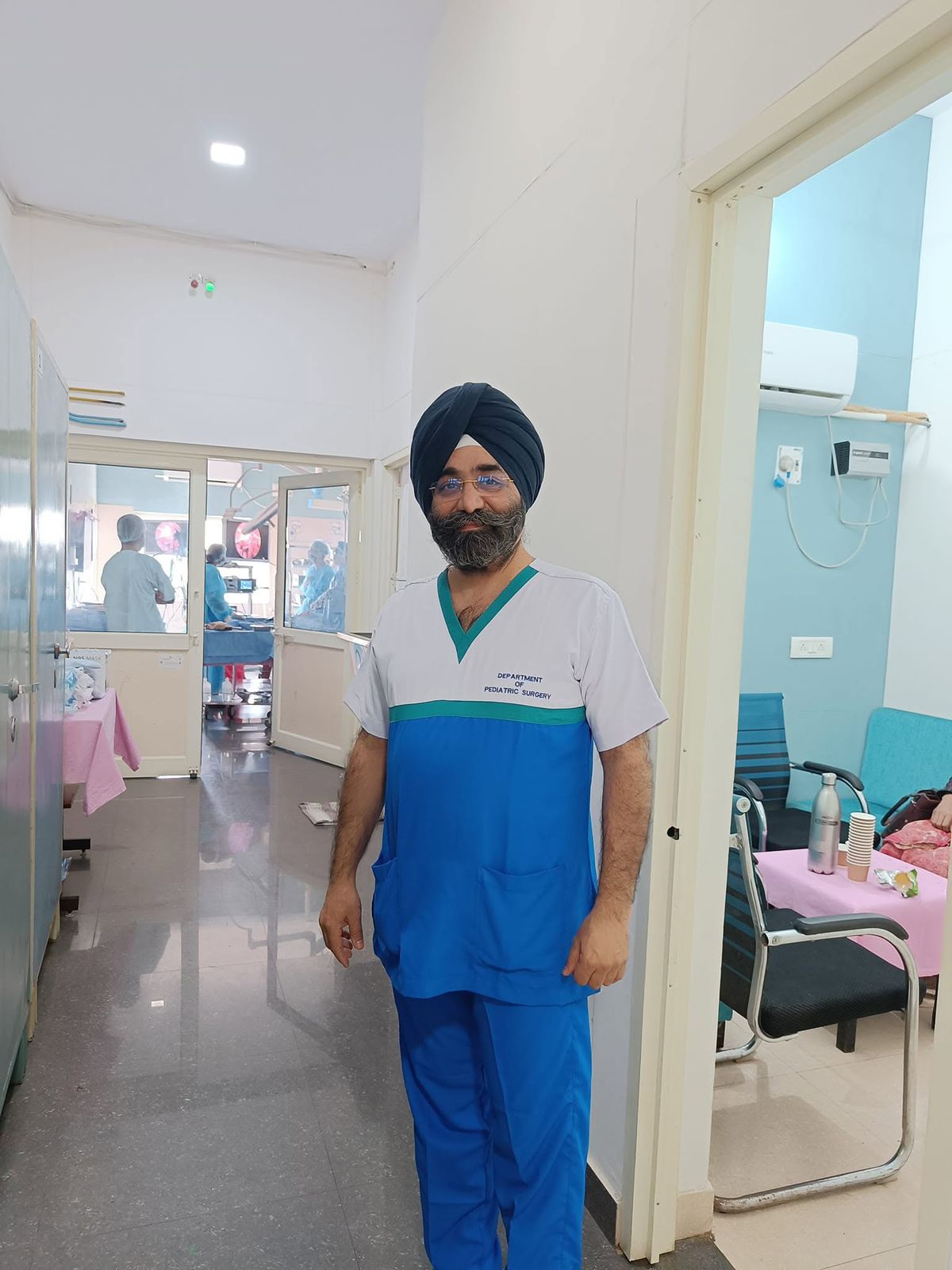
Meet Dr. Harparkash Singh Miglani
Dr. Harparkash Singh Miglani is a pediatric surgeon with over 30 years of experience, specializing in pediatric minimal access (Laparoscopic) Surgery, Hypospadias Surgery, Pediatric Urology, and Neonatal Surgery. He holds an M.Ch in Pediatric Surgery from PGIMER, Chandigarh, and has trained at leading surgical centers across India.
He has been recognized with the IAPS-Karl Storz Visiting Professor Fellowship and the Ethicon Travel Fellowship. He has participated as Faculty, Delegate, Operating Faculty, and Orator in more than 100 national and international conferences and live operative workshops. He has published his original peer-reviewed surgical technique in the field of hypospadias — the HPS Landmarks Technique, a foreskin-preserving method for hypospadias repair — in the Journal of the Indian Association of Pediatric Surgeons, along with several other publications and contributions as book chapters in textbooks of pediatric surgery.
Regional Distinction
Only pediatric surgeon in Amritsar currently offering minimally invasive laparoscopic surgery for children
Qualification
M.Ch in Pediatric Surgery, PGIMER, Chandigarh (1995); DNB (Pediatric Surgery), National Board of Examinations (1996)
Experience
30+ years in pediatric surgery
Fellowships
IAPS Karl Storz Visiting Professor Fellowship, Ethicon Travel Fellowship
Published Research
Many publications in prestigious national and international peer-reviewed journals; contributed book chapters in textbooks of Pediatric Surgery and Pediatric Endo Surgery
What to expect
What to expect: the surgical journey
Before Surgery
Detailed evaluation
Examination to assess the degree of hypospadias and plan the surgical approach.
Timing discussion
Dr. Miglani discusses the ideal age and timing for your child's surgery.
Pre-operative preparation
Fasting instructions and anaesthesia planning ahead of the procedure.
During Surgery
General anaesthesia
Your child is kept comfortable and pain-free throughout.
Reconstruction
The urethra, and chordee if present, are corrected using a technique suited to your child's anatomy.
Catheter placement
A small tube is placed to help urine drainage during initial healing.
After Surgery
Recovery room
Your child is monitored as they wake from anaesthesia.
Dressing & catheter care
Clear instructions are provided for at-home care of the dressing and catheter.
Discharge & follow-up
Most children go home within a day or two, with a follow-up visit scheduled.
Healing at home
Recovery after hypospadias/epispadias surgery
First few days
Rest at home; the dressing and catheter (if placed) are kept clean and dry as instructed.
Week 1
Catheter is usually removed around this time, as advised by Dr. Miglani.
2 weeks
Gradual return to normal light activity; swelling and bruising continue to settle.
4–6 weeks
Avoidance of straddle toys, cycling, and vigorous play until fully healed.
Follow-up
Review visits confirm healing and check the urine stream is normal.
Understand more about Laparoscopic Surgery
Cost transparency
What does hypospadias/epispadias surgery cost?
Cost depends on the specific procedure, complexity, room category and length of stay. Speak to our team for a personalised estimate before treatment.
Personalised Estimates
- Severity of the condition (distal vs. proximal)
- Whether it’s a first-time repair or a revision surgery
- Length of hospital stay
- Room category chosen
Common questions
Frequently asked questions
What is the best age for hypospadias surgery?
Most surgeons, including Dr. Miglani, recommend surgery between 6 months and 2 years of age, when tissue is easier to work with and before the child has memory of the procedure.
Will my child need more than one surgery?
Most cases are corrected in a single operation. More severe or proximal hypospadias, or revision cases, may occasionally need a staged approach — this is assessed individually.
What is the HPS Landmarks Technique?
It is Dr. Miglani’s own published surgical method that aims to preserve the foreskin during hypospadias repair where suitable, published in the Journal of the Indian Association of Pediatric Surgeons.
Should we avoid circumcision before surgery?
Yes — the foreskin is often used as part of the repair, so circumcision should be avoided until your child has been evaluated by a pediatric surgeon.
Is hypospadias surgery painful for my child?
The procedure is performed under general anaesthesia. Some discomfort during initial recovery is normal and is managed with pain medication.
Can adult men or older boys with untreated hypospadias still be treated?
Yes, though ideally treatment happens in early childhood. Older children and even adults can be evaluated for correction — this is discussed individually.
In parents' words
What families in Amritsar say
"No doubt, excellent pediatric surgeon, well experienced — got my daughter's appendicitis surgery done here."
Jagjit Singh Bains
Amritsar
"A very well experienced and efficient pediatric surgeon in Amritsar. Well-maintained child center with good hygiene."
Munna Kumar
Amritsar
"The doctor and staff are efficient with a lot of positivity around. I'm happy with services and would recommend this hospital for child surgery."
Sumanpreet Bajwa
Amritsar
Have questions about hypospadias or epispadias surgery?
Book a consultation with Dr. H.P.S. Miglani for an honest, experienced assessment and a clear surgical plan for your child.