
If your child’s doctor has mentioned laparoscopy or endoscopy, you may wonder whether they are two names for the same procedure. Both use a small camera to see inside the body, but they reach different areas and are used for different reasons.
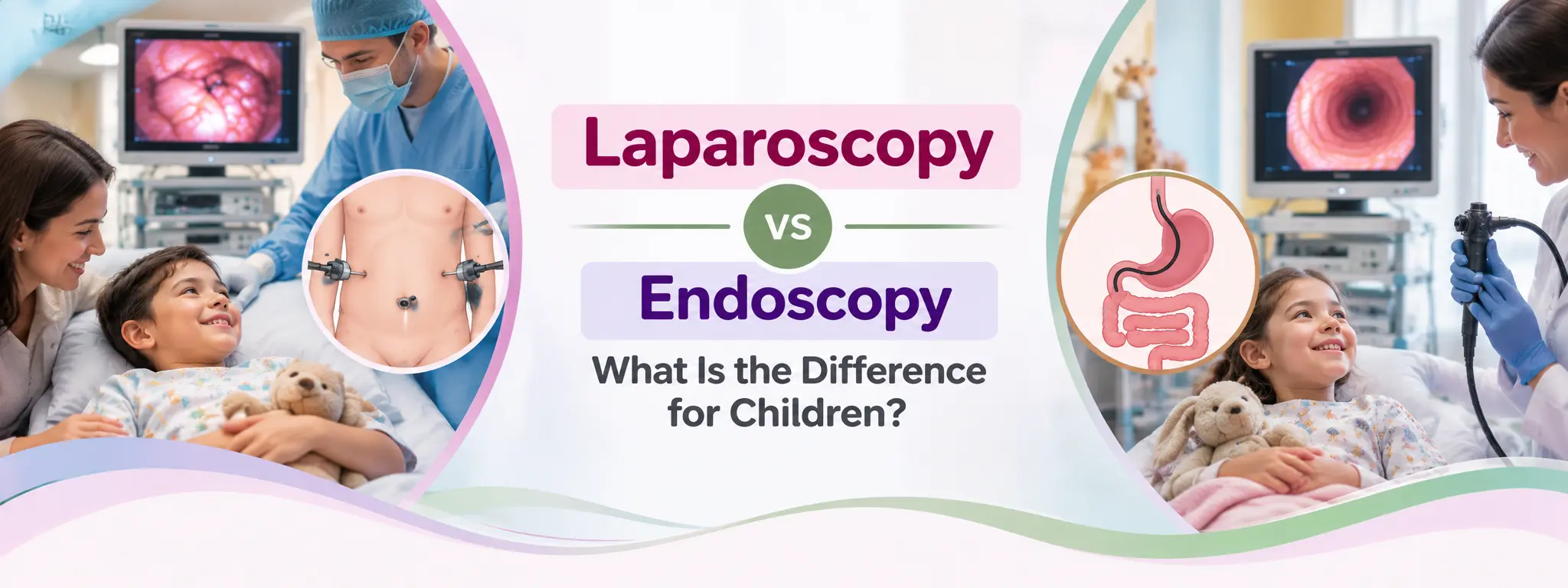
The main difference between laparoscopy and endoscopy is how the camera enters the body. Laparoscopy uses small cuts in the abdomen and gives a surgeon access to the abdominal or pelvic cavity. Gastrointestinal endoscopy usually passes through a natural opening, such as the mouth or rectum, to examine the inside of an organ or passage.
What Is Laparoscopy in Children?
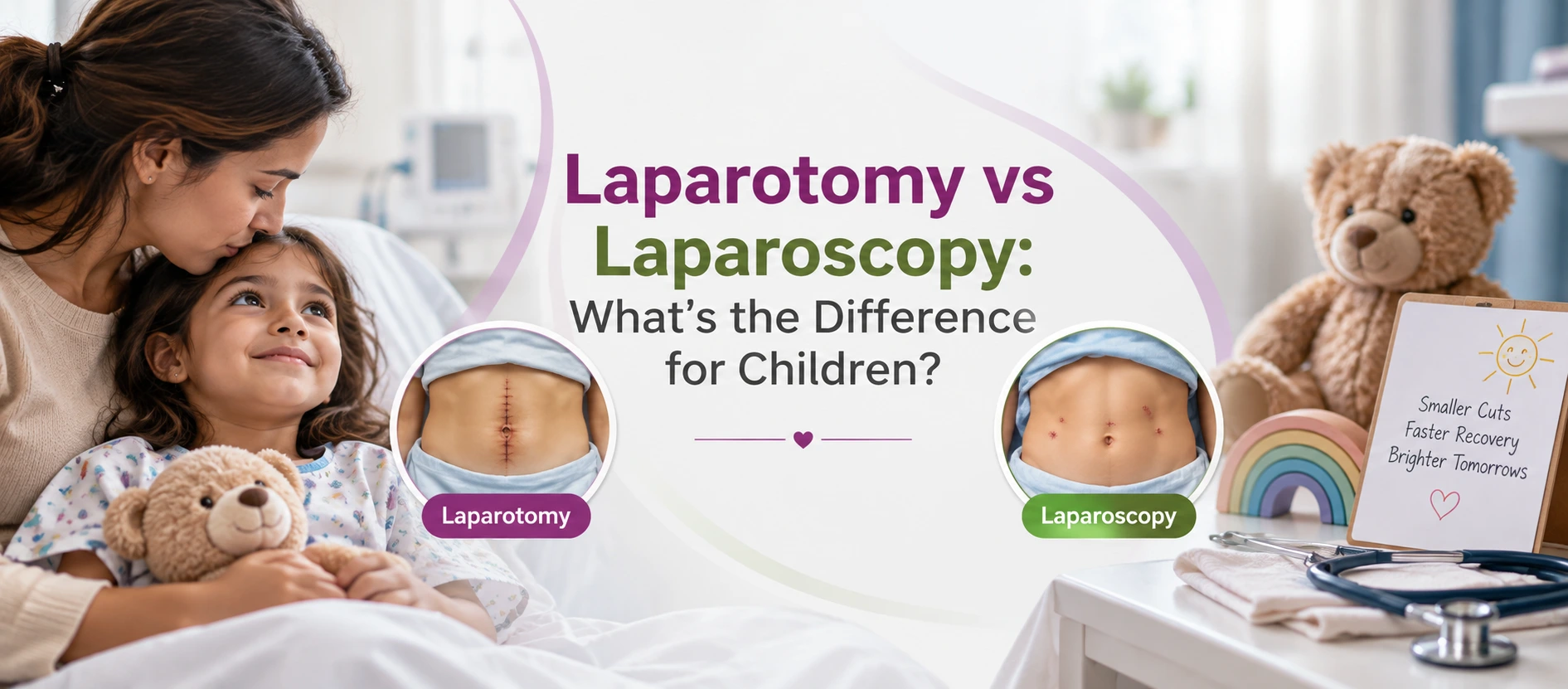
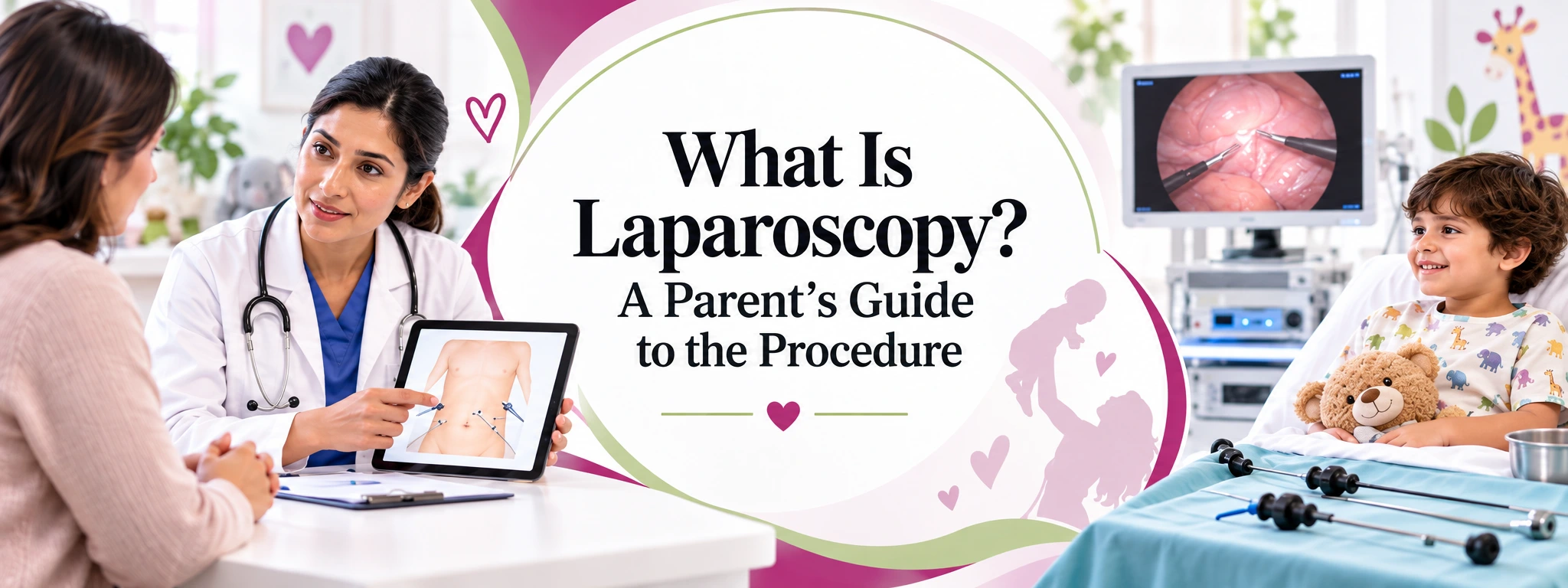
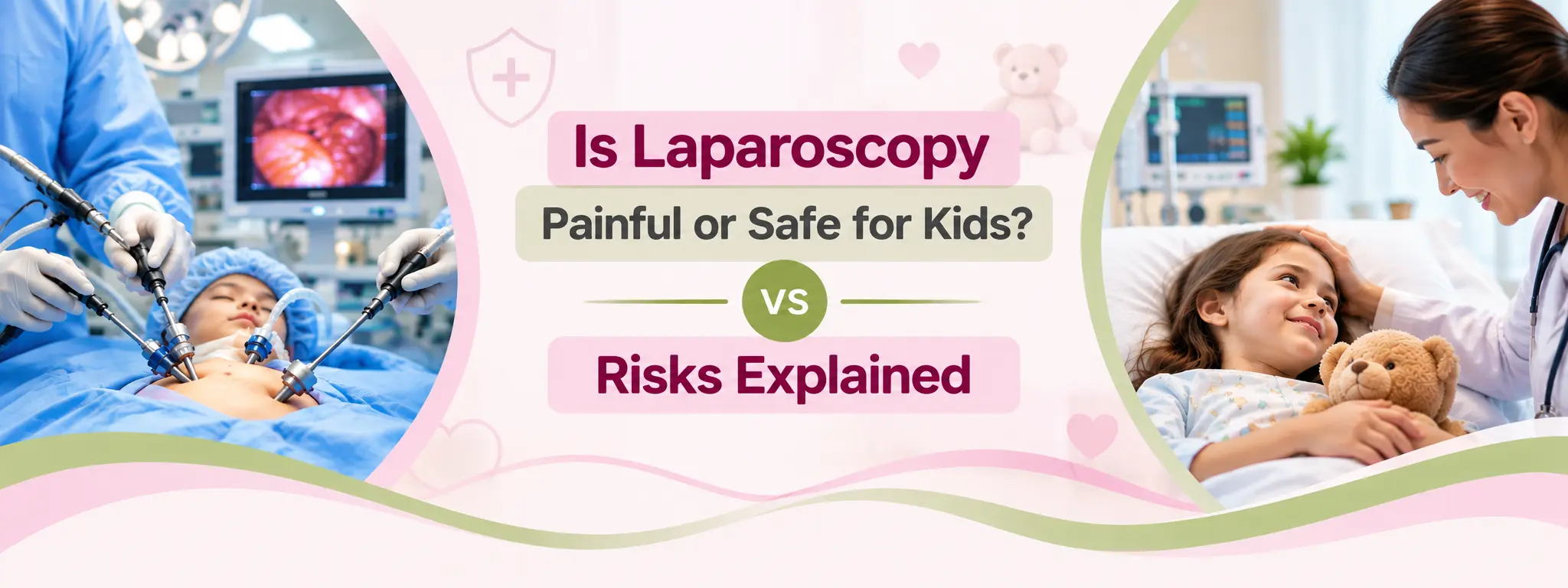
Laparoscopy is a minimally invasive surgical technique. A surgeon places a small camera called a laparoscope through a small opening in the abdomen. Other narrow instruments may be inserted through additional small openings if treatment is needed.
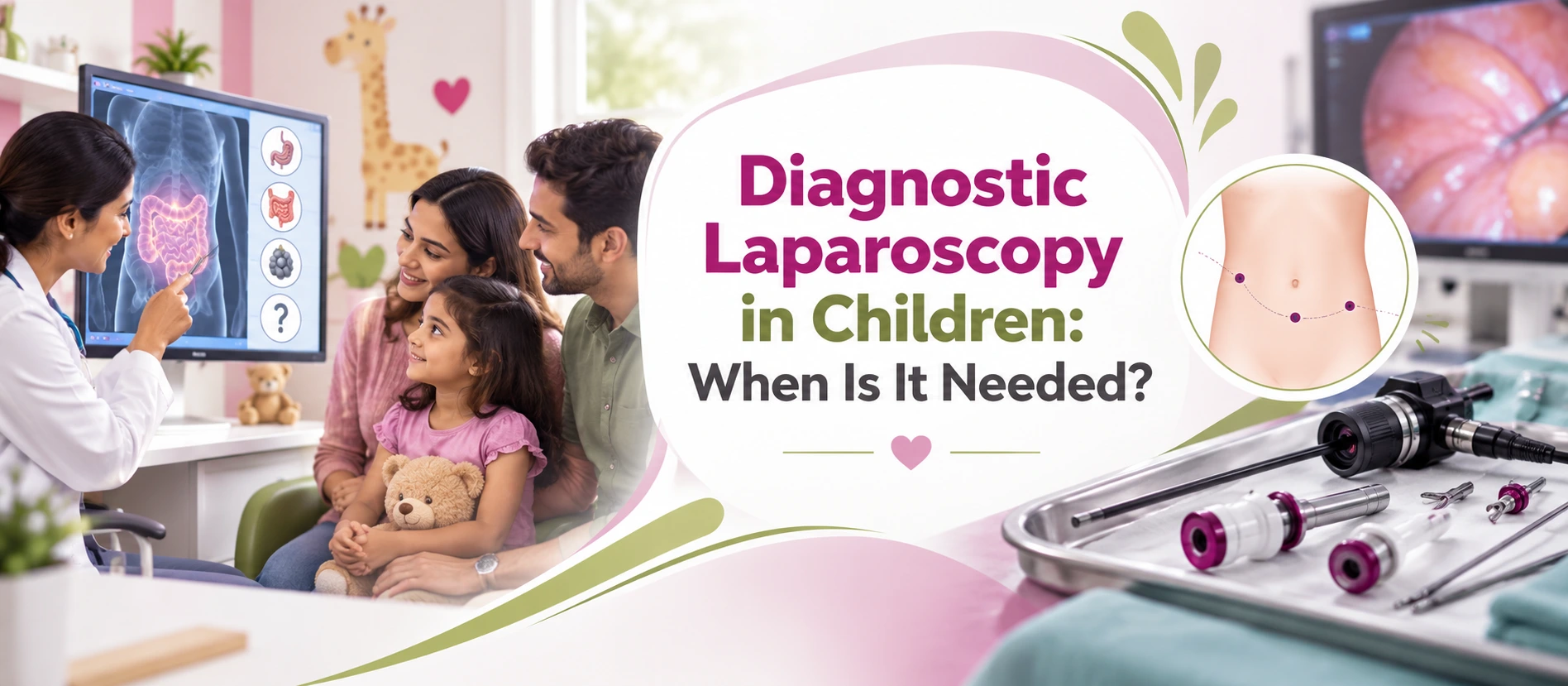
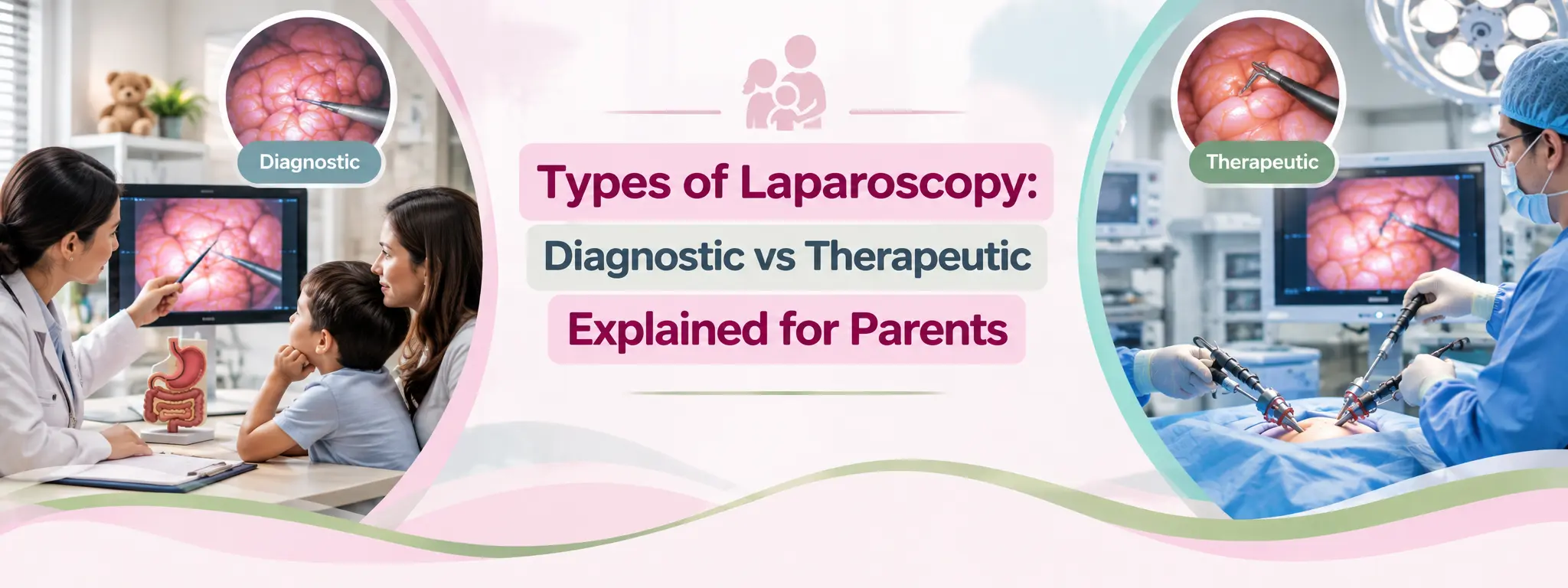
Laparoscopy can be used to diagnose a problem or perform surgery. In children, it may be considered for conditions such as appendicitis, hernia, undescended testis, ovarian problems, or other abdominal conditions that need surgical treatment.
One detail parents often miss is that “laparoscopy” does not tell you exactly how long recovery will take. Recovery depends greatly on the operation performed, the child’s health, and the complexity of the condition.
How Do Cuts Compare Between Laparoscopy and Endoscopy?
Laparoscopy and endoscopy differ here. Laparoscopy uses small abdominal cuts rather than the larger incision normally required for traditional open surgery, with the number and position of these openings depending on the operation and the area the surgeon needs to reach. Most gastrointestinal endoscopy, by contrast, does not require any skin cuts at all, since the endoscope passes through a natural body opening such as the mouth.
Will My Child Need Anesthesia for Laparoscopy?
Laparoscopy is usually performed under general anesthesia, meaning the child is asleep during the operation. The anesthesia team plans care according to factors such as the child’s age, health, medical history, and procedure.
Parents should follow the hospital’s exact instructions about fasting, medicines, and arrival time rather than relying on general advice found online.
What Is Endoscopy in Children?
Endoscopy uses a thin instrument called an endoscope to examine the inside of an organ or body passage. For an upper GI endoscopy, the scope passes through the mouth to examine the esophagus, stomach, and first part of the small intestine.
Most gastrointestinal endoscopies do not require cuts in the skin. Doctors can also pass small tools through an endoscope to collect a biopsy, control some types of bleeding, or perform selected treatments.
This is an important distinction: endoscopy often looks at the inner lining of an organ or passage, while laparoscopy allows a surgeon to see the abdominal cavity around the organs.
Will My Child Be Awake During Endoscopy?
Not necessarily. Pediatric endoscopy may involve sedation or general anesthesia depending on the type of procedure, the child’s age, health, and the medical team’s assessment. Children’s Hospital of Philadelphia notes that most pediatric endoscopies use sedation and some use general anesthesia.
There are also specialized procedures for selected children, such as transnasal endoscopy, that may be performed without sedation. This is why parents should ask exactly which type of endoscopy has been recommended.
Laparoscopy vs Endoscopy: How Do They Compare?
The procedure with fewer skin cuts is not automatically the better choice. Doctors select the method according to the organ involved, the condition being investigated, and whether treatment or surgery is required.
Factor |
Laparoscopy |
Endoscopy |
| Instrument | Laparoscope | Endoscope |
| Entry route | Small abdominal cuts | Usually a natural body opening |
| Skin cuts | Yes | Usually no for GI endoscopy |
| Area viewed | Abdominal or pelvic cavity | Inside organs or passages |
| Main purpose | Diagnosis and surgery | Diagnosis and selected treatments |
| Anesthesia in children | Usually general anesthesia | Sedation or general anesthesia may be used |
| Biopsy possible | Yes | Yes |
| Recovery | Depends on operation | Often shorter after a simple diagnostic procedure. |
Why Might a Child Need Laparoscopy or Endoscopy?
Laparoscopy may be advised when a pediatric surgeon needs direct access to an area inside the abdomen or pelvis to diagnose or treat a surgical condition.
Endoscopy is more useful when doctors need to inspect the inner surface of a passage or organ. Pediatric GI endoscopy may be used to investigate swallowing problems, inflammation, digestive symptoms, bleeding, or conditions that require tissue samples.
Can Endoscopy Replace Laparoscopy?
Usually not. Endoscopy and laparoscopy reach different anatomical areas and answer different medical questions.
For example, an upper endoscopy can examine the lining of the stomach, but it cannot provide the same surgical access to the abdominal cavity that laparoscopy provides. Choosing endoscopy simply because it usually involves no skin cut may therefore be inappropriate for some conditions.
Are Laparoscopy and Endoscopy Safe for Children?
Both are established procedures in pediatric care, but no medical procedure is completely risk-free. The risks depend on the exact procedure, the child’s age and health, anesthesia needs, and whether treatment is performed during the procedure.
Specialist experience also matters. Pediatric laparoscopy and endoscopy call for training specific to children’s anatomy, physiology, and anesthesia needs, which is why these procedures are usually performed by pediatric surgeons, pediatric gastroenterologists, or other appropriately trained pediatric specialists.
Parents should ask about the risks related to their child’s specific procedure rather than relying on a general comparison of which method is “safer.”
Which Procedure Is More Painful?
There is no fair one-size-fits-all comparison.
Laparoscopy involves small abdominal wounds and recovery from the operation itself. After an upper GI endoscopy, there are no abdominal skin wounds, although temporary symptoms such as a sore throat, bloating, or nausea may occur.
Which Procedure Has a Faster Recovery?
A simple diagnostic endoscopy often allows a quicker recovery than abdominal surgery. However, recovery after laparoscopy depends mainly on what surgery was performed rather than on the camera technique alone.
Parents should ask when their child can eat normally, return to school, bathe, play, and restart sports.
Questions Parents Should Ask Before the Procedure
Before your child’s procedure, consider asking:
- Why has this procedure been recommended?
- What area will the doctor examine or treat?
- What type of anesthesia will my child receive?
- Does my child need to fast?
- Could a biopsy or treatment be performed at the same time?
- Will my child go home the same day?
- When can school and normal activity restart?
- What symptoms after the procedure require medical attention?
These questions provide more useful guidance than choosing between procedures based only on incision size.
FAQs
Is endoscopy considered surgery?
Endoscopy is often diagnostic, but it can also be used for treatments such as taking a biopsy, controlling bleeding, or removing certain foreign objects.
Can a child eat before laparoscopy or endoscopy?
Fasting may be needed when sedation or anesthesia is planned. Always follow the instructions provided by your child’s medical and anesthesia team.
Can laparoscopic surgery change to open surgery?
Sometimes a surgeon may need to change the surgical approach if doing so becomes safer or necessary to complete the operation. Ask your surgeon whether this is relevant to your child’s planned procedure.
Who performs these procedures in children?
The specialist depends on the procedure. Pediatric laparoscopy is performed by appropriately trained surgeons, while pediatric endoscopic procedures may involve specialists such as pediatric gastroenterologists or other trained pediatric surgical and medical specialists.
When Your Child Has Been Advised a Procedure
Rather than asking which procedure sounds less invasive, ask which one gives the medical team the right access to diagnose or treat your child’s condition.
If your child has been advised surgery and you need more clarity about the recommended approach, anesthesia, or expected recovery, a pediatric surgical consultation at Child Surgeons, Amritsar can help you understand the treatment plan and the questions worth asking before moving forward.