
Your child has ongoing stomach or pelvic symptoms. Tests have been done, but there is still no clear answer. Then the pediatric surgeon mentions a procedure. For many parents, the first thought is, “Why does my child need surgery if the scans have already been done?”
Diagnostic laparoscopy may be considered when doctors need more information about a possible surgical problem inside the abdomen or pelvis. It gives the surgeon a direct view of these areas and can sometimes provide answers that imaging alone cannot.
What Is Diagnostic Laparoscopy in Children?
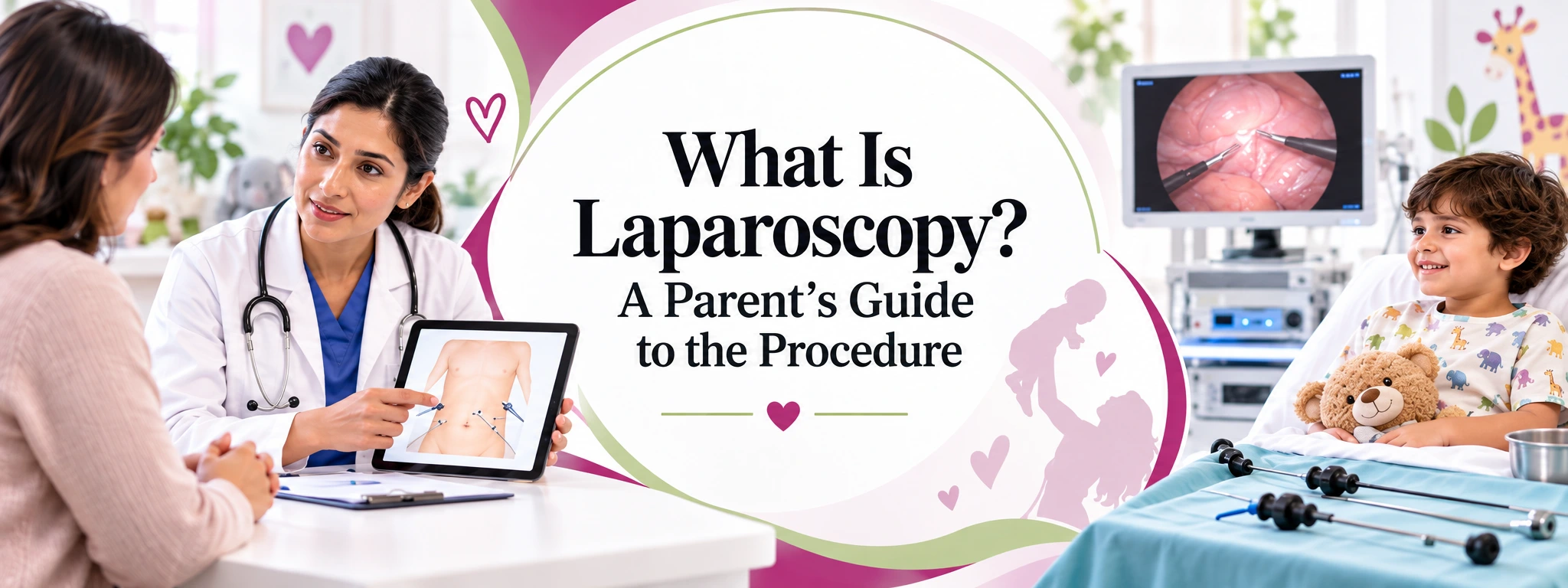
Diagnostic laparoscopy is a minimally invasive surgical procedure that allows a surgeon to look directly inside the abdomen or pelvis. A thin instrument called a laparoscope, which contains a camera and light, is inserted through a small incision.
The main purpose is to find or confirm the cause of a problem. In some cases, the surgeon may also take a tissue sample, called a biopsy, or treat an abnormality found during the procedure.
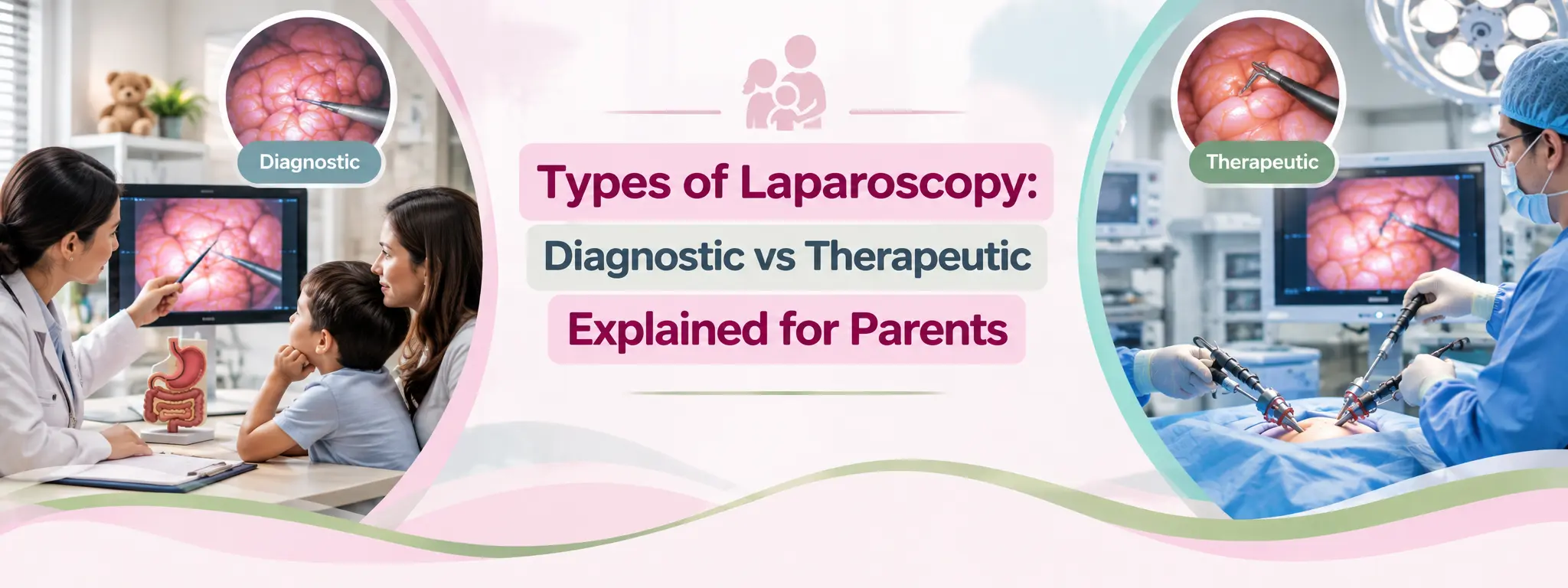
Diagnostic vs Therapeutic Laparoscopy
Diagnostic and therapeutic laparoscopy use similar minimally invasive techniques, but their main goals are different.
- Diagnostic laparoscopy is mainly used to identify or confirm a condition.
- Therapeutic laparoscopy is mainly performed to treat a known problem.
- A diagnostic procedure may sometimes include treatment if a suitable problem is found, and we discussed this possibility during consent.
This distinction matters for parents because “diagnostic” does not mean the surgeon can only look.
Why Might a Child Need Diagnostic Laparoscopy?
A pediatric surgeon may consider diagnostic laparoscopy when symptoms and examination findings suggest a possible surgical condition but earlier investigations have not provided enough information.
Depending on the child’s situation, it may help evaluate:
- Persistent or unexplained abdominal symptoms
- A suspected abdominal condition that remains unclear
- Abdominal adhesions or other abnormalities
- A non-palpable undescended testis
- Selected ovarian or pelvic problems
- An abdominal mass when direct examination or biopsy is required
Having one of these problems does not automatically mean a child needs laparoscopy. The surgeon considers the child’s symptoms, physical examination, earlier tests, and the specific condition they are trying to confirm or rule out.
One useful question for parents to ask is: “What exactly are you hoping to find or rule out with laparoscopy?” A clear answer helps families understand why the procedure is being considered.
Why Can Laparoscopy Be Needed When Ultrasound or Scans Are Unclear?
Ultrasound, CT, and MRI are valuable because they allow doctors to examine structures inside the body without surgery. However, imaging and diagnostic laparoscopy provide different types of information.
MedlinePlus notes that doctors may use laparoscopy when imaging tests do not provide enough information to confirm a diagnosis.
|
Imaging Tests
|
Diagnostic Laparoscopy
|
| Examine the body without surgery | Directly views structures with a camera |
| May include ultrasound, CT, or MRI | Uses a laparoscope through a small incision |
| Helps identify many conditions | May clarify selected unresolved surgical questions |
| Does not usually allow treatment during the test | May allow biopsy or treatment when appropriate |
A normal or unclear scan does not automatically mean laparoscopy is necessary. The more important question is whether a meaningful surgical concern remains after the child’s symptoms, examination and previous investigations are considered together.
What Happens During Diagnostic Laparoscopy?
Diagnostic laparoscopy in children is generally performed under anesthesia so the child remains asleep and still during the procedure.
The exact technique depends on what the surgeon needs to examine, but the usual process includes:
- The child receives anesthesia and is monitored.
- The surgeon makes a small incision in the abdomen.
- The laparoscope is inserted.
- Carbon dioxide is used to create space so the surgeon can see the organs clearly.
- The surgeon may insert other small instruments if a biopsy or treatment is needed.
- The instruments are removed, and the incisions are closed.
Laparoscopy uses small incisions rather than the larger incision usually required for open abdominal surgery.
What Happens If the Surgeon Finds a Problem?
What happens next depends on the finding itself, the child’s condition, and what parents agreed to before surgery.
The surgeon may:
- Confirm and document a diagnosis.
- Take a biopsy
- Treat an appropriate problem during the same procedure.
- Recommend another treatment later.
Laparoscopy may also show no visible surgical abnormality.
That does not always mean the procedure provided no useful information. Ruling out certain surgical causes may help the child’s medical team decide what to investigate next.
Parents should discuss before surgery what the surgeon may do if an unexpected but treatable condition is discovered.
Is Diagnostic Laparoscopy Safe for Children?
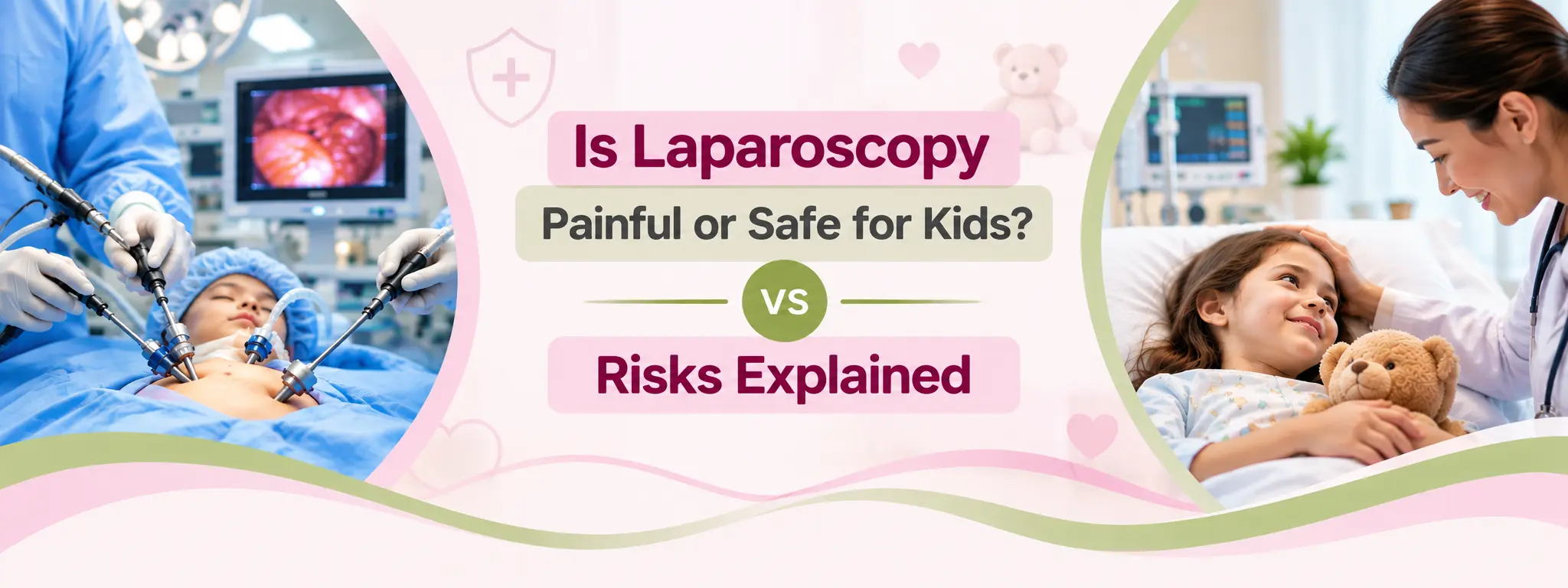
Laparoscopy uses smaller incisions than open surgery, but it is still an operation and has possible risks.
These may include:
- Bleeding
- Infection
- Injury to a nearby organ or structure
- Anesthesia-related complications
- The need to change to open surgery in some situations
A child’s individual risk depends on factors such as age, general health, the suspected condition, and what the procedure may require.
Parents should discuss these risks with the pediatric surgeon and anesthesia team rather than relying on general risk information alone.
What Should Parents Expect Before and After the Procedure?
Before surgery, parents receive instructions about fasting, medicines, and when to arrive at the hospital. Follow these instructions exactly, as safe fasting before anesthesia is important.
Tell the surgical team about:
- Medicines or supplements your child takes
- Allergies
- Recent fever, cough, cold or illness
- Previous problems with anesthesia
- Any recent change in health
Recent illness can sometimes affect whether anesthesia should go ahead as planned, so parents should inform the care team rather than deciding on their own.
After surgery, children are monitored as they wake from anesthesia. The team introduces fluids, food, and pain relief as advised.
Return to school, sports and active play depends on the procedure performed and the child’s recovery. Follow the discharge instructions given for your child rather than using a general recovery timetable.
FAQ’s
Is diagnostic laparoscopy considered surgery?
Yes. It is a minimally invasive surgical procedure because a laparoscope is inserted through a small incision to examine the abdomen or pelvis.
Can another scan be done instead of diagnostic laparoscopy?
Sometimes another test may help. The choice depends on what question the surgeon needs to answer and what previous investigations have already shown.
Can diagnostic laparoscopy become open surgery?
Yes, in some situations the surgeon may need to change to an open operation for safe diagnosis or treatment. Discuss this possibility before surgery.
Will my child need to stay overnight?
Not always. Hospital stay depends on recovery from anesthesia, what was found or treated, and the child’s overall condition.
What should I ask the surgeon before diagnostic laparoscopy?
Ask what condition they are trying to confirm, what alternatives are available, what may happen if a problem is found, and what recovery is expected for your child.
Making an Informed Decision
Diagnostic laparoscopy should answer a specific clinical question, not simply be performed because a scan was unclear. Parents should understand what the surgeon hopes to find, what alternatives have been considered, and what could happen during the procedure.
If an experienced pediatric surgeon recommends diagnostic laparoscopy for your child, discussing these questions can help you make a more informed decision. Families in Amritsar can consult the Child Surgeons team for specialized pediatric surgical evaluation and minimally invasive surgical care.