
When a child needs abdominal surgery, parents often hear words like “laparoscopy” and “laparotomy.” Both can treat problems inside the abdomen, but the surgeon reaches the problem differently.
Understanding laparotomy vs laparoscopy can make conversations with your child’s surgeon easier. The difference involves more than the size of the cut. The child’s condition, the type of operation, and the access the surgeon needs can all affect which approach is recommended.
What Is the Main Difference Between Laparotomy and Laparoscopy?
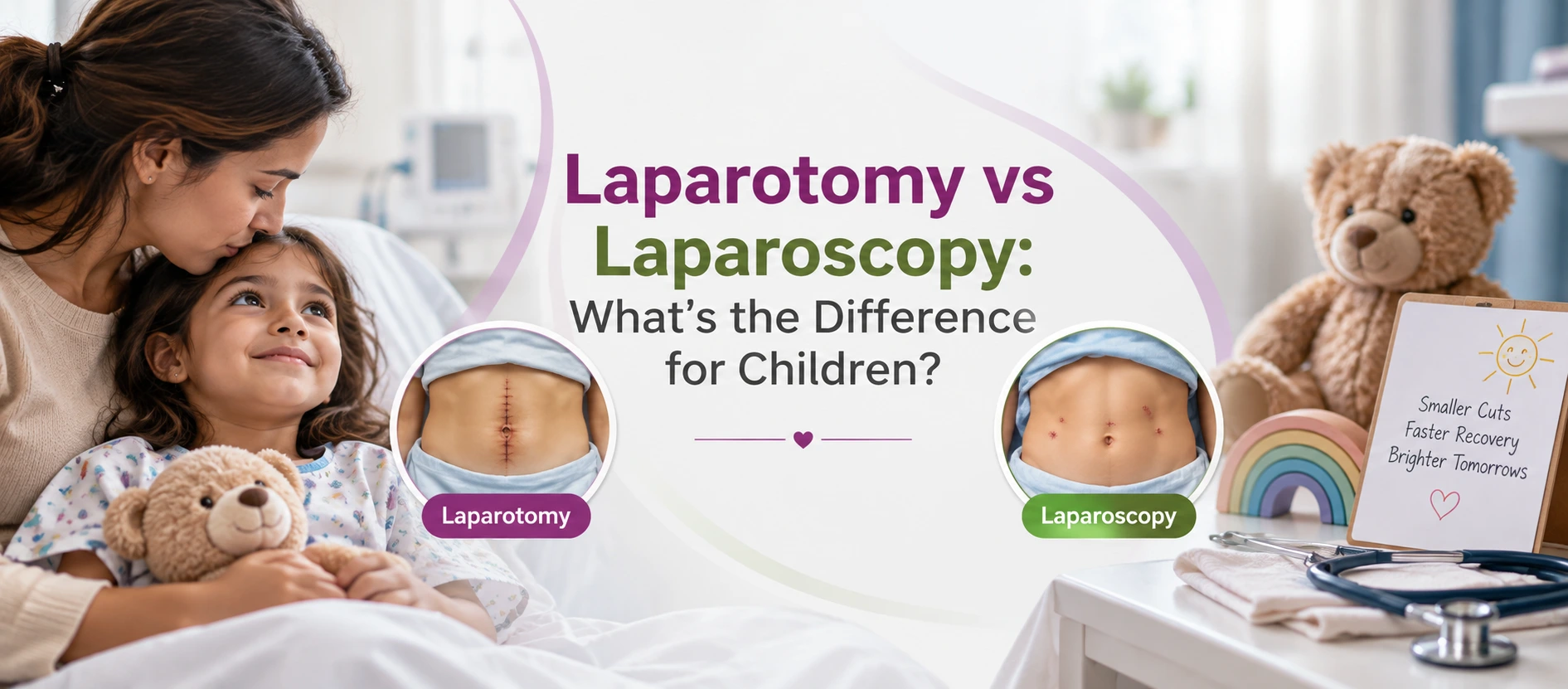
Laparoscopy is a minimally invasive surgical approach that uses small cuts, a camera, and narrow surgical instruments. A laparotomy is an open surgical approach that uses a larger cut to give the surgeon direct access to the abdomen.
An important point for parents is that these words describe how the surgeon reaches the area being treated. They do not tell you how serious your child’s condition is.
What Is Laparoscopy?
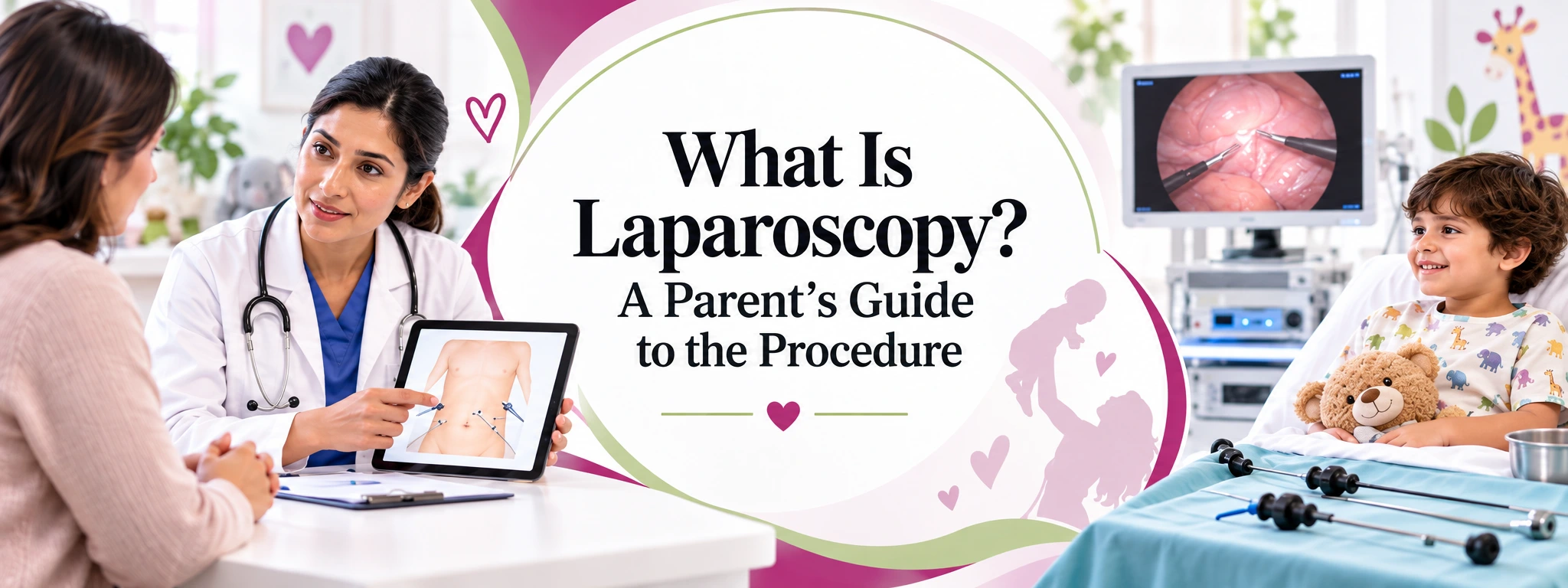
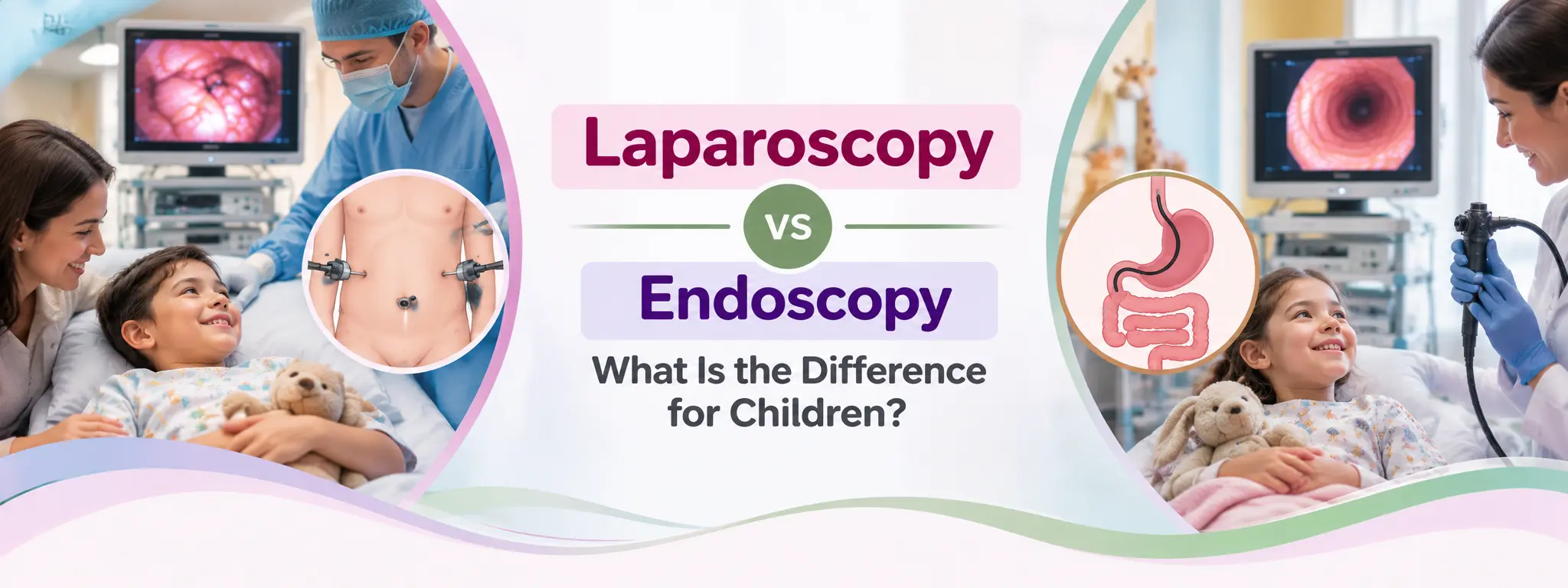
During laparoscopy, the surgeon places a thin instrument called a laparoscope through a small cut. It has a camera that sends images from inside the body to a screen. Other small openings can be used for surgical instruments.
Laparoscopy is also called keyhole surgery or minimally invasive surgery. It can be used to diagnose a problem or perform an operation.
What Is a Laparotomy?
A laparotomy involves making a larger opening in the abdomen. This gives the surgeon direct access to the organs and tissues inside. It can be useful when a wider view or more working space is needed.
Open surgery is not an outdated or “second-best” choice. In some situations, it is the safer and more suitable way to complete an operation.
| Factor | Laparoscopy | Laparotomy |
| Surgical approach | Minimally invasive | Open surgery |
| Incisions | Usually several small cuts | Larger abdominal cut |
| Surgical view | Camera-guided | Direct access |
| Scarring | Usually smaller | Usually larger |
| Recovery | Often faster | May take longer |
| Hospital stay | Often shorter | May be longer |
| Best choice | Depends on the child and operation | Depends on the child and operation. |
How Are Laparoscopy and Laparotomy Performed in Children?
Both approaches allow a pediatric surgeon to reach and treat a problem inside the body. The main difference is the way the surgeon gains access.
During pediatric laparoscopy, small openings are created for the camera and instruments. The camera gives the surgeon a clear view of the area being treated. Child Surgeons uses pediatric laparoscopic surgery for selected conditions involving areas such as the appendix, hernia, gallbladder, chest, and abdomen.
With laparotomy, the surgeon works through a larger opening. This may provide more direct access when the condition is complex or when the surgeon needs more room to examine and treat the affected area.
A smaller incision does not automatically mean a smaller or simpler operation. Laparoscopy can still be used for significant surgery. What matters is the procedure being performed, not only the size of the skin incision.
How Do Pain, Recovery, Hospital Stay and Scarring Compare?
Parents often focus on recovery because they want to know when their child will feel comfortable again and return to normal activities.
Because laparoscopy uses smaller incisions, it is often linked with less wound-related pain, smaller scars, a shorter hospital stay and faster recovery than comparable open procedures.
Laparotomy creates a larger wound so that healing may take longer. However, it is misleading to give one fixed recovery time for every child. Recovery depends on the condition being treated, the extent of the operation, the child’s health and whether any complications occur.
For example, two children may both have laparoscopic surgery but still recover at different speeds because their operations were not the same.
Parents should ask the surgeon about:
- Expected hospital stay
- Pain control after surgery
- Wound care at home
- When bathing is allowed
- When school can restart
- When sports or physical activity can restart
These answers are more useful than a general recovery estimate found online.
Are Laparoscopy and Laparotomy Safe for Children?
Both approaches can be appropriate when selected for the right child and the right condition. Like all operations, they can involve risks such as bleeding, infection, injury to nearby structures, and anesthesia-related problems.
Minimally invasive surgery does not mean risk-free surgery. The aim is not simply to make the smallest possible cut. The aim is to treat the child’s problem safely and effectively.
Can Laparoscopy Be Changed to Open Surgery?
Sometimes an operation that starts with laparoscopy needs to be changed to open surgery. This may happen if the surgeon needs better access, finds something unexpected, or feels that continuing through small incisions would not be the safest option.
Parents should not automatically see this change as a failed laparoscopy. Converting to open surgery can be a safety decision made in the child’s best interest.
Why Might a Pediatric Surgeon Recommend One Approach Over the Other?
The decision is based on more than scar size or recovery speed. A pediatric surgeon considers what will allow the condition to be treated safely and completely.
Factors may include:
- The child’s diagnosis
- The location of the problem
- The child’s age and anatomy
- How complex the operation is
- Whether surgery is planned or urgent
- Previous abdominal operations
- The amount of inflammation or infection
- The access needed during surgery
Laparoscopy may be suitable when the surgeon can clearly see and safely treat the problem through small openings.
Laparotomy may be preferred when wider or more direct access is needed. The need for open surgery does not automatically mean that a child’s condition is more serious.
A useful way for parents to think about the decision is this: the best surgical approach is not always the one with the smallest incision. It is the one that treats the child’s problem safely and effectively.
What Should Parents Ask Before Their Child’s Surgery?
Parents do not need to choose between laparoscopy and laparotomy on their own. Instead, they can ask questions that help them understand the surgeon’s plan.
Useful questions include:
- Why do you recommend this approach for my child?
- Is minimally invasive surgery possible for this condition?
- Is there a chance the operation may need to become open surgery?
- What should we expect during recovery?
- How will pain be managed?
- When can my child return to school and normal activities?
- What warning signs should we watch for at home?
Clear answers to these questions can help families prepare for surgery with realistic expectations.
FAQ’s
Does needing open surgery mean my child’s condition is very serious?
Not necessarily. Open surgery may be chosen because the surgeon needs better access or because that approach suits the planned procedure.
Will my child have scars after laparoscopic surgery?
Laparoscopy still requires small skin incisions so that small scars can remain. Their appearance usually changes as the wounds heal.
Can every abdominal operation in children be done laparoscopically?
No. Whether laparoscopy is suitable depends on the condition, anatomy, complexity of surgery, and the access needed by the surgeon.
Does a larger incision always mean a worse outcome?
No. Incision size is only one part of surgery. Safe treatment of the underlying condition is more important than choosing the smallest possible cut.
When should parents discuss laparoscopy with a pediatric surgeon?
If abdominal surgery has been advised, parents can ask whether a minimally invasive approach is suitable and why one surgical method is being recommended over another.
Making the Right Surgical Choice for Your Child
Parents may naturally prefer smaller cuts, but the safest choice must fit the child’s actual condition. A pediatric surgeon can explain why a particular approach is being advised and what your family should expect before and after the operation.
If your child has been advised of abdominal surgery, you can discuss whether pediatric laparoscopic surgery or an open approach may be appropriate for their specific needs.